
News & Insights
Stay updated with the latest developments, research, and announcements from the QuanChain team.

Q-Day Tracker 2026: Every Quantum Milestone That Matters for Bitcoin and Crypto
A live-updated timeline of every quantum computing milestone relevant to Bitcoin and crypto — from Google Sycamore to Willow, IBM's roadmap, and what the current qubit gap really means.
Latest Articles
Google Willow 2026: Progress Update and What the Next Chip Means for Bitcoin
Google's Willow chip proved below-threshold error correction at scale in 2024. In 2026, the question is: what has Google built since, and how close is the roadmap to a chip that actually threatens Bitcoin?
Does Microsoft's Majorana 1 Change Your Bitcoin Security Timeline? A Holder's Assessment
Microsoft claims topological qubits will reach 1 million qubits — but Majorana 1 has 8. Here is what the realistic roadmap means for Bitcoin holders: when to watch, what thresholds matter, and what to do before those thresholds are crossed.
Crypto Quantum Risk Assessment: How to Audit Your Portfolio and Protocol
Not every cryptocurrency faces equal quantum exposure. A structured quantum risk assessment looks at signature algorithm, address reuse patterns, chain migration readiness, and your personal custody setup. This guide walks through each dimension so you can quantify your actual exposure before Q-Day arrives.
Bitcoin BIP-360 P2QRH: Pay-to-Quantum-Resistant-Hash Explained
BIP-360 proposes Pay-to-Quantum-Resistant-Hash (P2QRH), a Taproot-compatible address type that would let Bitcoin holders migrate to post-quantum signature schemes before Q-Day. This article covers the technical design, the signature algorithm choices (ML-DSA, SPHINCS+, Falcon), the activation path, and what it means for holders who want to act now.
CNSA 2.0 Compliant Blockchain: NSA Quantum-Resistant Algorithm Requirements Explained
The NSA's Commercial National Security Algorithm Suite 2.0 mandates post-quantum cryptography for all national security systems by 2033. For blockchain and enterprise crypto infrastructure, CNSA 2.0 sets the compliance bar: ML-KEM for key establishment, ML-DSA for signatures, and SHA-384/512 for hashing. This article covers what compliance means for blockchain systems and the transition timeline.
Is IOTA Quantum Resistant in 2026? Ed25519 Status After the Winternitz Migration
IOTA's Tangle uses Ed25519 signatures and a DAG-based consensus architecture. Ed25519 is not quantum resistant: Shor's algorithm can break it the same way it breaks ECDSA. IOTA has researched post-quantum options including Winternitz OTS and XMSS, but has not deployed a quantum-safe signature scheme on its main network as of 2026.
ML-KEM-768 vs X25519: Handshake Performance Overhead Explained
ML-KEM-768 adds 2,272 bytes to a TLS handshake versus X25519's 64 bytes. That sounds alarming. The reality is more nuanced: CPU cost is comparable, the penalty is network-bound, and the hybrid X25519MLKEM768 standard already in Chrome and Cloudflare shows the migration is achievable without meaningful latency regression.
Post-Quantum Key Rotation On-Chain: BIP-32 Gap, HSM Support, and SpendAndRotate
Migrating blockchain key management to post-quantum cryptography is not just a library swap. It requires rethinking how keys are derived, rotated, stored, and committed on-chain. This guide covers the BIP-32 exposure gap, UTXO versus account model migration paths, HSM support for ML-DSA, and how QuanChain's SpendAndRotate solves the key rotation problem at the protocol level.
Q-Day Cryptocurrency: What It Means for Every Digital Asset You Hold
Q-Day is the hypothetical moment when a quantum computer powerful enough to break elliptic curve cryptography becomes operational. For cryptocurrency holders, it does not mean an immediate loss of funds. It means the threat model for every wallet holding ECDSA-signed assets changes permanently. This article covers what Q-Day means specifically for crypto holders, the current timeline estimates, and what actions are available now.
Photonic Quantum Computing: How Light-Based Qubits Work and Why They Could Beat Superconductors
Photonic quantum computing uses individual photons as qubits, operating at room temperature without dilution refrigerators, potentially enabling faster scaling than superconducting systems.
Quantum Computing and AI in 2026: Where They Intersect, Where They Diverge
Quantum computing and AI are often conflated. In 2026, quantum machine learning has genuine near-term advantages in optimization and molecular simulation but cannot replicate what LLMs do.

Quantum Computing Stocks 2026: IonQ, IBM, Rigetti & D-Wave Ranked
IonQ, Rigetti, D-Wave, IBM, and Quantinuum compared on roadmap credibility, qubit quality, and financial health in 2026. Which companies are closest to fault-tolerant scale — and what each milestone means for Bitcoin's Q-Day clock.
Best Quantum Computing ETFs 2026: QTUM, QUBT & What Fund Flows Signal About Q-Day Timeline
Defiance QTUM is the largest quantum computing ETF with over $5 billion in AUM as of mid-2026, after adding pure-play quantum hardware names in March. For crypto holders, quantum ETF inflows are a leading indicator of institutional confidence in the Q-Day timeline. This guide covers which ETFs to watch, what QTUM and QUBT actually hold, and what the 2026 flows signal about when quantum computers become a real threat to Bitcoin.
The Quantum Investment Thesis Every Crypto Holder Should Understand in 2026
The same capital and hardware progress that makes quantum computing stocks attractive to investors also accelerates the Q-Day threat to Bitcoin and Ethereum. Understanding the investment thesis behind quantum hardware funding directly maps to understanding your migration window as a crypto holder.
Quantum Computing Companies Ranked by Progress Toward Breaking Bitcoin in 2026
Not all quantum computing progress is equally relevant to Bitcoin security. This ranking evaluates IBM, Google, IonQ, Microsoft, Quantinuum, and Rigetti specifically by logical qubit count, gate fidelity, error correction efficiency, and stated fault-tolerant timelines — the metrics that determine when secp256k1 ECDSA becomes vulnerable.
Quantum Computing Market Size 2026: What the $50B Forecast Means for Blockchain Security
Market size forecasts for quantum computing range from $7 billion to $20 billion by 2030, with McKinsey projecting $198 billion by 2040. That capital deployment directly accelerates hardware scaling timelines. For blockchain security, a growing quantum market is a shrinking migration window.
Migrating from ECDSA to ML-DSA: A Production Guide for Blockchain Developers
A step-by-step technical guide to replacing ECDSA with ML-DSA (CRYSTALS-Dilithium) in production blockchain systems, covering key sizes, API differences, storage costs, and the case for running both schemes in parallel during the transition window.
liboqs Python Tutorial: Implementing ML-DSA and CRYSTALS-Kyber in 2026
A hands-on tutorial for blockchain developers covering how to install liboqs Python bindings, generate ML-DSA keypairs, sign transaction hashes, verify signatures, and use ML-KEM (Kyber) for key encapsulation, with performance benchmarks for each operation.
Hybrid Classical and Post-Quantum Signatures: Running ECDSA and ML-DSA Together
How hybrid signature schemes work in practice: signing transactions with both ECDSA and ML-DSA simultaneously, the overhead costs, how to structure transaction formats that carry both signatures, and when to sunset the classical leg of the scheme.
Post-Quantum Smart Contract Security Patterns: What to Change Before Q-Day
Six concrete design patterns for quantum-safe smart contracts, including how to avoid storing raw public keys on-chain, how to migrate ECDSA verification logic in Solidity and Rust, how to choose hash functions, and how to build key rotation mechanisms into contract architecture.
Testing Post-Quantum Cryptography in Your Blockchain CI/CD Pipeline
A practical guide to integrating post-quantum cryptography tests into blockchain CI/CD pipelines: how to run ML-DSA Known Answer Tests, write integration tests for hybrid signature schemes, benchmark signing performance in GitHub Actions, and structure regression tests when changing crypto libraries in Python, Go, and Rust.
Is NEAR Protocol Quantum Safe? Ed25519 Exposure and Migration Plans
NEAR Protocol uses Ed25519 as its default signature scheme, which is vulnerable to Shor's algorithm on a fault-tolerant quantum computer. This analysis covers NEAR's account model, public key exposure patterns, and what a post-quantum migration would require for validators and wallet holders.
Is Sui Quantum Safe? Ed25519 and BLS12-381 Exposure in the Move Ecosystem
Sui uses a multi-signature framework supporting Ed25519, secp256k1, and BLS12-381 for aggregated validator signatures. All three schemes are vulnerable to Shor's algorithm. This analysis covers Sui's object model, address derivation, public key exposure, and what a post-quantum migration would require for the Move ecosystem.
Is Aptos Quantum Resistant? BLS12-381, Ed25519, and the Move Language Factor
Aptos uses Ed25519 for user accounts and BLS12-381 for validator consensus, both derived from the Diem/Libra codebase shared with Sui. Neither scheme is quantum resistant. This analysis focuses on Aptos-specific account address derivation, key rotation mechanics, and what post-quantum migration would require for a Move-based chain.
Stellar XLM Quantum Security: Ed25519 Keys and Multi-Signature Migration Risk
Stellar uses Ed25519 exclusively for all account key pairs, and every Stellar public address is a direct encoding of the Ed25519 public key. This means 100 percent of Stellar accounts have fully exposed public keys. This analysis covers multi-signature migration risk, the Stellar Development Foundation's position, and the specific quantum exposure from Stellar's payments and CBDC use cases.
Is TON (The Open Network) Quantum Safe? Ed25519 Wallets and Validator Risk
TON uses Ed25519 for wallet key pairs and has hundreds of millions of potential users through its Telegram integration. This makes its quantum risk surface uniquely large: a successful quantum attack on TON wallets would affect a mainstream consumer population, not just crypto-native users. This analysis covers TON's address derivation, sharding complexity, and the Telegram integration risk.
Is Solana Quantum Safe in 2026? Ed25519 Exposure and What SOL Holders Should Do
Solana uses Ed25519 elliptic-curve signatures, which a sufficiently powerful quantum computer running Shor's algorithm could break. There is no post-quantum migration roadmap on Solana's public timeline. Here is what that means for SOL holders today and what the realistic threat window looks like.
Is Cardano Quantum Safe? The ADA Holder's Honest Guide
Cardano uses Ed25519 for transaction signatures and relies on classical cryptographic primitives throughout its Ouroboros consensus. Like most major chains, it has no post-quantum migration deployed. This guide covers the precise quantum exposure of ADA holders, what Cardano's research roadmap says, and what the realistic threat timeline looks like.
NIST FIPS 204 and 205: What Blockchain Developers Need to Know
NIST finalized FIPS 204 (ML-DSA/CRYSTALS-Dilithium) and FIPS 205 (SLH-DSA/SPHINCS+) in August 2024, establishing the first federal post-quantum signature standards. This is the practical guide blockchain developers and protocol designers need to understand what these standards mean for chain security, signature size trade-offs, and migration requirements.
Is Ledger or Trezor Quantum Safe? Hardware Wallet Quantum Risk Explained
Neither Ledger nor Trezor is quantum safe. Both devices use ECDSA secp256k1 for signing, the exact algorithm Shor's algorithm breaks. Hardware security protects against classical theft — not quantum math attacks on your exposed public key.
Post-Quantum Migration Cost 2026: Enterprise Budgets, Timelines & NIST 2035 Deadline
NIST deprecates ECDSA for all systems by 2030 and bans it entirely by 2035. For enterprises with on-chain assets, that deadline carries a real cost. This guide covers what post-quantum migration actually costs in 2026, typical project timelines, why blockchain architecture choices can reduce the bill to near zero, and which enterprises are most exposed.
Is MetaMask Quantum Safe? What Every ETH Holder Needs to Know
MetaMask is not quantum safe. It relies on ECDSA secp256k1 signatures, which a sufficiently powerful quantum computer running Shor's algorithm could break — exposing every Ethereum address that has ever sent a transaction.
Google's 2030 Quantum Deadline and What It Means for Crypto
Google's Willow chip and NIST's 2030 ECDSA deprecation deadline have reset the quantum threat timeline. Here is what current hardware actually means for Bitcoin, why the migration window is narrowing fast, and what a quantum-safe blockchain looks like.
How Much ETH Is Quantum Exposed? The 55% Problem Bitcoin Doesn't Have
Roughly 55 to 60 percent of all ETH value sits in addresses that have already sent a transaction — permanently exposing their public keys on-chain. Bitcoin has a structural protection Ethereum lacks entirely. Here is the technical breakdown.
Grover's Algorithm Explained: The Quantum Attack on Hash Functions
Grover's algorithm gives a quantum computer a quadratic speedup when searching unsorted data, which halves the effective security of hash functions. Here is what that means for SHA-256, AES, and blockchain.
IBM Quantum Roadmap 2026: Flamingo Processor and the Blockchain Security Timeline
IBM's 2026 quantum roadmap targets the Flamingo processor at 100,000+ physical qubits with built-in error correction. This post covers what IBM's milestones mean for the timeline to cryptographically relevant quantum computing and which blockchain signatures are at risk first.
Quantum Error Correction Explained: Why Qubit Count Alone Doesn't Break Encryption
A 1,000-qubit quantum computer today has at most one logical qubit useful for cryptographic computation. Understanding quantum error correction is the key to reading quantum threat timelines accurately.
Qubit Types Compared: Superconducting, Trapped Ion, Photonic, and Topological
The four main qubit modalities differ by orders of magnitude in coherence time, gate speed, and scalability. The choice of qubit type affects the realistic timeline to cryptographically relevant quantum computers.
Quantum Supremacy vs Quantum Advantage: What the Distinction Means for Crypto Security
Google claimed quantum supremacy in 2019. IBM disputed it. Neither claim tells you anything about the threat to ECDSA-256. Here is why the terms are often misunderstood and what would actually constitute a cryptographic threat.
Microsoft's Topological Qubits: What the Majorana 1 Chip Means and Doesn't Mean
Microsoft's Majorana 1 chip claims topological qubits with 100:1 physical-to-logical overhead rather than 1,000:1. The announcement was significant but contested. Here is what the evidence actually shows.
ML-KEM Explained: FIPS 203 Key Encapsulation, Kyber Parameter Sets & Blockchain Use
ML-KEM (FIPS 203) is NIST's standardized post-quantum key encapsulation mechanism, formerly known as CRYSTALS-Kyber. It secures key exchange — not digital signatures. ML-KEM-512 (128-bit), ML-KEM-768 (192-bit), and ML-KEM-1024 (256-bit) cover the three security levels. For blockchains, ML-KEM protects encrypted communication channels; a complete post-quantum stack also needs ML-DSA for transaction signing. This explainer covers the lattice math, ciphertext sizes, and where key encapsulation fits in a quantum-resistant architecture.
Lattice Cryptography Primer: Why Hard Geometry Protects Post-Quantum Systems
Lattice cryptography underlies every NIST post-quantum standard for signatures and key exchange. This primer explains the math, the hardness assumptions, and why Shor's algorithm fails against them.
BIKE and HQC Explained: Why NIST Kept These Post-Quantum Algorithms as Backup in 2026
BIKE and HQC are NIST Round 4 backup candidates for post-quantum key exchange. They cut McEliece's 524KB public keys to under 2.3KB while providing algorithmic diversity beyond lattice schemes. Here is what that means for blockchain security.
Bitcoin Taproot Quantum Safety: Is Schnorr Resistant? The Answer in 2026
Taproot users are more exposed to quantum attack than P2PKH holders, not less. Schnorr signatures (Taproot) expose the full public key in every output, while P2PKH hides it until spend. Here is why the Taproot upgrade made no progress on quantum resistance.
Ethereum's Endgame Post-Quantum Plan: EIP-7702, ERC-4337, and Account Abstraction
Ethereum's post-quantum migration depends on account abstraction and EIP-7702. The Endgame phase enables smart wallets to swap signature schemes without breaking existing addresses.
Ordinals, Inscriptions, and Quantum Risk: Why NFT Holders on Bitcoin Face Unique Exposure
Transferring an Ordinal inscription requires revealing your public key on-chain. High-value inscriptions in Taproot outputs are quantum-exposed from the moment they are created.
Is Cardano Quantum Resistant? Ed25519 Vulnerability Analysis
Cardano uses Ed25519 signatures — not quantum resistant. Shor's algorithm can derive Ed25519 private keys in polynomial time once a fault-tolerant quantum computer exists. This post breaks down exactly which Cardano addresses are exposed, what IOG's post-quantum roadmap says, and when Cardano actually plans to migrate.
XRP Ledger Quantum Security: secp256k1, Ed25519, and the XRPL Post-Quantum Gap
XRPL supports two signature algorithms, both quantum-vulnerable. Fast finality reduces some attack windows, but no post-quantum roadmap exists and account reserves complicate migration.
Polkadot's Quantum Vulnerability: Parachains, SR25519, and the Substrate Risk
Polkadot uses SR25519, an elliptic curve scheme vulnerable to Shor's algorithm. Its parachain architecture and the Substrate ecosystem extend this exposure across hundreds of chains.
Algorand Post-Quantum Status: Falcon Signatures and the Falconnet Testnet
Algorand tested FALCON post-quantum signatures on a dedicated testnet and leads most blockchains in research maturity. Production deployment has not happened, and key tradeoffs remain unresolved.
QuanChain's Quantum Threat Oracle: How the Network Monitors Real-Time Quantum Risk
The Quantum Threat Oracle tracks LQCp/h (Logical Qubit Cost per Hour) across multiple data sources and triggers CCRP migration phases automatically when defined thresholds are crossed.
Seed Phrase Quantum Security: Your 24 Words Are Safe — Your Public Key Is Not
Your BIP-39 seed phrase stays offline and is never broadcast to the network — quantum computers cannot see it. What Shor's algorithm targets is the public key derived from it, exposed every time you receive or spend from an address. This guide explains exactly what quantum computers can and cannot attack in your wallet.
Post-Quantum Key Management: A Crypto Holder's Checklist
A practical checklist for crypto holders — not developers — on reducing quantum key exposure before post-quantum wallets are widely available. Covers which address formats to avoid, how to audit your current exposure, what 'key rotation' means for a regular holder, and what to do before a migration mechanism exists on your chain.
NIST Post-Quantum Migration Timeline: Federal Deadlines and What They Mean
NIST has set firm deadlines for post-quantum migration. Federal agencies must complete PQC transitions by 2030, and the private sector should treat those dates as their own planning horizon.
Federal Quantum Security Mandates: NSM-10, CNSA 2.0, and What the Government Requires
NSM-10, OMB M-23-02, and CNSA 2.0 form a binding framework for federal post-quantum migration. Financial firms and blockchain developers that interface with regulated entities must understand these requirements now.
Enterprise Blockchain Quantum Migration: A Framework for Large Organizations
Enterprise blockchain deployments face unique quantum migration challenges: regulatory compliance, multi-party governance, and long-lived data. A structured six-step framework reduces risk and meets regulatory timelines.
Banking Sector Quantum Readiness in 2026: Where the Largest Institutions Stand
Major banks are in the inventory and assessment phase of post-quantum migration as of 2026. BIS, FSB, OCC, and ECB guidance creates regulatory pressure to accelerate. Full migration is expected 2028-2032.
NSA CNSA 2.0 Explained: ML-KEM, ML-DSA Deadlines & Blockchain Impact
NSA's CNSA 2.0 mandate requires ML-KEM-1024, ML-DSA-87, and SLH-DSA for all national security systems by 2030, with full transition by 2033. The same algorithms are now required for FIPS-compliant financial infrastructure. This guide explains each deadline, which blockchain systems already meet the requirements, and what non-compliant chains need to change before the cutoff.
Europe's Quantum-Safe Infrastructure Plan: ENISA, NIS2, and the EU Quantum Agenda
ENISA, NIS2, and national bodies like BSI and ANSSI are shaping Europe's post-quantum cryptography requirements. Fintechs and blockchain companies operating in the EU should have PQC roadmaps in place by 2027.
Post-Quantum TLS Explained: X25519+ML-KEM Hybrid and What It Means for Blockchain APIs
Chrome, Firefox, and Cloudflare deployed X25519+ML-KEM-768 hybrid TLS in 2024, protecting connections against harvest-now-decrypt-later attacks. But TLS protects data in transit, not on-chain keys. Here is the distinction that matters for crypto developers.
CBDC Quantum Security: Why Central Bank Digital Currencies Must Plan for Q-Day Now
CBDCs face unique quantum risk: decade-long lifetimes, nation-state threat actors, and sovereign financial stakes. Most current CBDC prototypes use ECDSA. The time to redesign is before deployment, not after.
FIPS 204 and CRYSTALS-Dilithium: Preserving Interoperability in High-Volatility Blockchain Environments
FIPS-certified CRYSTALS-Dilithium (ML-DSA) introduces specific implementation requirements that affect how blockchains handle high-volatility environments while preserving interoperability with external systems. This technical breakdown covers the three changes FIPS 204 made to Dilithium, why they matter for production deployment, and how to maintain cross-chain and cross-system interoperability when migrating to the standard.
CRYSTALS-Dilithium's 2420-Byte Signatures: The Blockchain Throughput Problem
CRYSTALS-Dilithium signatures are 2420 to 4595 bytes: 40 to 70 times larger than ECDSA's 64 bytes. This deep dive works through the throughput math, shows what happens to block capacity when any chain bolts on post-quantum signatures, and explains how QuanChain's Three-Channel Architecture and 70% data compression absorb the overhead without sacrificing TPS.
Is ML-DSA the Same as CRYSTALS-Dilithium? FIPS 204 Explained
ML-DSA and CRYSTALS-Dilithium are the same algorithm under two different names. ML-DSA is the designation NIST assigned when it standardised Dilithium as FIPS 204 in August 2024. This article explains what changed in the standardisation, what stayed identical, why the naming shift matters for enterprise compliance and FIPS-certified deployments, and what blockchain developers need to know when choosing between security levels.
Bitcoin's Post-Quantum Response Plan: BIP 360, P2QRH & What's Still Missing
Bitcoin's post-quantum response centres on BIP 360, which proposes P2QRH (Pay-to-Quantum-Resistant-Hash) as a new output type. This analysis covers what BIP 360 actually proposes, why the Coinbase report's finding of 6.9 million already-exposed BTC makes timing critical, the address migration challenge it must solve, and what the proposal leaves unresolved as of late 2026.
QRL vs XRP Ledger vs QuanChain: Which Is Actually Quantum Resistant?
QRL uses XMSS hash-based signatures, making it genuinely quantum resistant today. XRP Ledger supports Ed25519 but has no confirmed quantum migration path. QuanChain builds ML-KEM and ML-DSA in from genesis. This comparison scores all three across five criteria: signature algorithm, public key exposure, throughput under post-quantum load, migration architecture, and NIST FIPS compliance.
Is Consensus (CSN) Quantum-Resistant? And How to Evaluate Any Crypto
Consensus (CSN) uses standard elliptic-curve cryptography and is not quantum-resistant. This article explains the specific reasons why, then provides a reusable five-point framework for evaluating the quantum resistance of any blockchain: signature algorithm, public key exposure, migration path, throughput capacity, and governance mechanism for cryptographic upgrades.
Quantum Resistant Crypto Coins List 2026: 5 Projects With Genuine PQC
Most 'quantum resistant' crypto coins are not. This list covers the five blockchain projects in 2026 that have actually implemented NIST post-quantum cryptography — not roadmap promises. For each: which signature scheme they use, what their key exposure window is, and whether they meet the FIPS 204/205 bar for genuine quantum resistance.
Quantum Threats to Blockchain: Every Attack Vector Explained
A complete technical guide to every quantum threat against blockchain: Shor's algorithm vs ECDSA, Grover's algorithm vs hash functions, harvest-now-decrypt-later, consensus layer attacks, and long-range reorg attacks. Which blockchains are most exposed, what the realistic timeline looks like, and what structural solutions actually work.
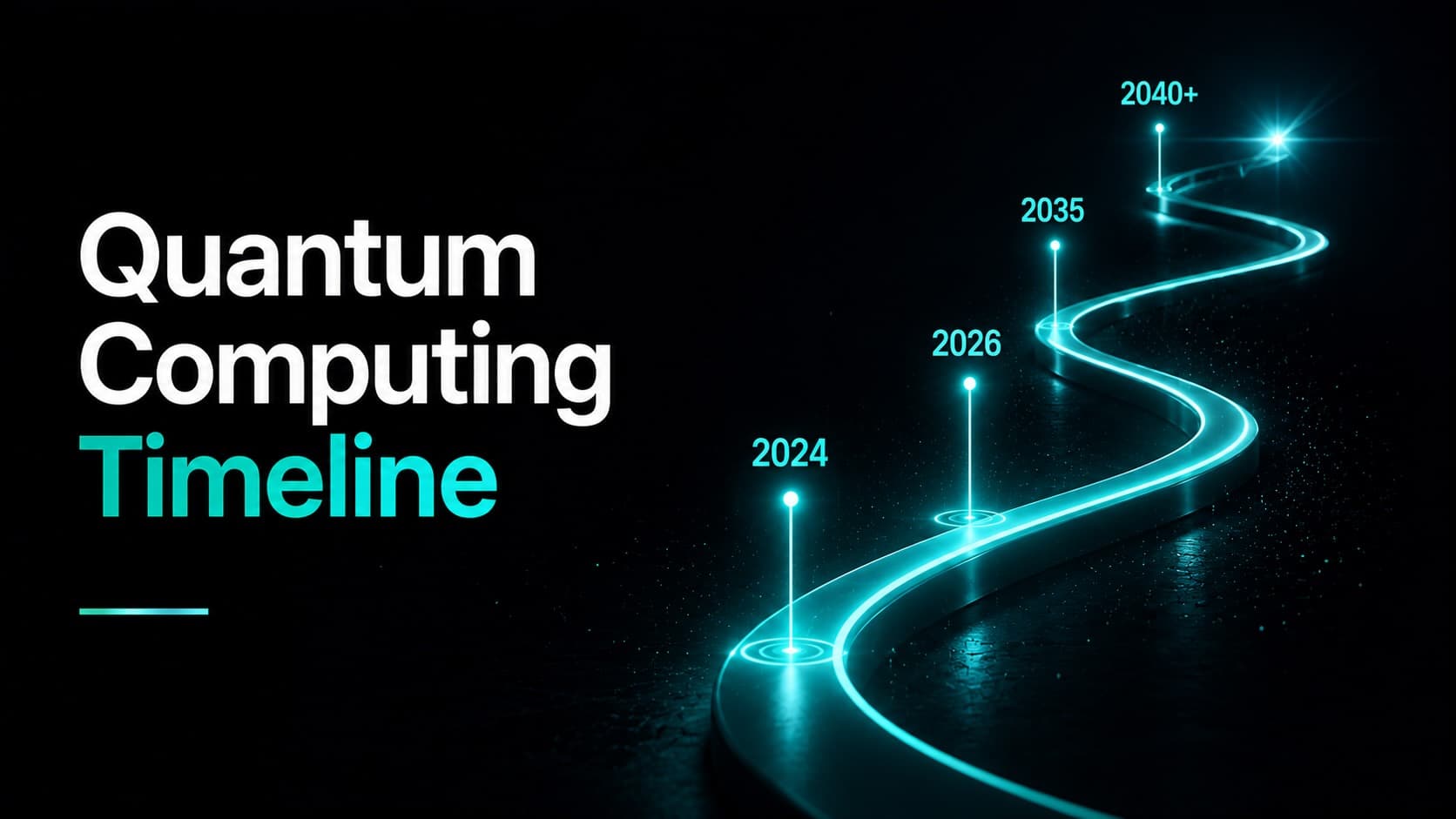
Quantum Computing Timeline 2025-2035: When Could It Threaten Bitcoin?
In 2022, researchers set the qubit count to break Bitcoin at 317 million (1 hour) or 13 million (1 day). By 2026 those estimates keep falling as error correction improves. This timeline tracks every major revision from Shor's 1994 paper through Google Willow, IBM Heron, and Microsoft Majorana 1, and maps what each milestone means for the 2030-2035 threat window.
Post-Quantum Cryptography: The Definitive Guide (2026)
Post-quantum cryptography is the field that will determine whether the internet survives the quantum era intact. This guide covers the mathematics behind lattice, hash, and code-based schemes, NIST's eight-year standardization process, the four selected algorithms, signature size and performance tradeoffs, and why algorithm selection alone is not enough to secure a blockchain.
How to Protect Your Crypto from Quantum Computers: A Practical Guide for 2026
Quantum computers will eventually break the elliptic-curve cryptography protecting Bitcoin, Ethereum, and most altcoins. This guide walks through your real exposure today, what address types are actually at risk, what moving funds does and doesn't fix, why hardware wallets offer false comfort, and what genuine long-term protection looks like.
CRYSTALS-Dilithium Signature Size & NIST FIPS 204: ML-DSA Parameter Sets Explained
CRYSTALS-Dilithium is NIST's primary post-quantum signature standard, published as FIPS 204 (ML-DSA) in August 2024. ML-DSA-44 produces 2,420-byte signatures (Level 2), ML-DSA-65 produces 3,309 bytes (Level 3), and ML-DSA-87 produces 4,595 bytes (Level 5) — 38–72× larger than ECDSA's 64 bytes. This explainer covers the Module-LWE security foundation, all three parameter sets, how to choose a security level, and the throughput cost for blockchains.
FALCON: The Compact Post-Quantum Signature Scheme for High-Performance Blockchains
FALCON (FN-DSA) produces signatures eight times smaller than CRYSTALS-Dilithium, making it the most bandwidth-efficient NIST-standardised post-quantum signature scheme available. Here is the complete technical breakdown: how NTRU lattices make that compactness possible, why floating-point sampling is the implementation trap, and how QuanChain deploys both Dilithium and FALCON across its security tiers.
NIST Post-Quantum Cryptography Standards 2024: What Changed and What It Means
In August 2024, NIST finalized the first three post-quantum cryptography standards in history, covering digital signatures and key encapsulation. Here is what ML-KEM, ML-DSA, SLH-DSA, and FN-DSA actually specify, which candidates were broken during evaluation and why, and what the standards mean practically for blockchain projects facing the quantum transition.
How to Write Quantum-Safe Smart Contracts: A Developer Guide
Post-quantum cryptography changes how smart contracts are signed, deployed, and priced. This guide covers TADEQS wallet integration, Channel 2 deployment, fee model differences, testnet testing, and the common pitfalls that catch developers migrating from classical Solidity environments.
Post-Quantum Wallet Security: What Every Crypto User Needs to Know in 2026
ECDSA wallets are more exposed than most users realize, and "quantum-resistant" marketing claims are masking real architectural gaps. This guide cuts through the noise: what makes a wallet genuinely secure against quantum attacks, why hardware wallets don't solve the problem, and how QuanChain's TADEQS architecture eliminates public key exposure at the protocol level.
DeFi and the Quantum Threat: Why Decentralized Finance Needs Post-Quantum Security
DeFi protocols concentrate enormous value behind the same elliptic-curve cryptography that quantum computers will eventually break. Smart contract keys, liquidity pool logic, oracle signing infrastructure, and governance multi-sigs are all exposed, and the attack surface is uniquely amplified when billions of dollars sit behind a single recoverable key pair. Here is what quantum-resistant DeFi infrastructure looks like and why it cannot wait.
Bitcoin's Quantum Vulnerability: A Complete Technical Analysis
Bitcoin's cryptographic foundation, the secp256k1 elliptic curve, was designed against classical adversaries. A sufficiently powerful quantum computer running Shor's algorithm changes that calculus entirely. This is a precise technical breakdown of exactly where Bitcoin is exposed, how an attack would unfold, and why the path to a fix is far more complicated than simply swapping signature schemes.
Ethereum's Quantum Risk: Account Abstraction, EIP-7560, and the Migration Path
Ethereum's ECDSA-based account model exposes millions of addresses to future quantum attack. EIP-7560 and account abstraction offer a migration path, but the timeline is uncertain, the BLS aggregation gap remains open, and over 165 million ETH sits in wallets whose public keys are already on-chain. Here is what Vitalik has said, what the proposals actually solve, and how QuanChain's from-genesis architecture avoids the problem entirely.
Post-Quantum Blockchain Comparison: QRL, Algorand, QuanChain, IOTA, and QANplatform
Not every blockchain that claims quantum resistance actually has it. This side-by-side technical comparison scores QRL, Algorand, QuanChain, IOTA, QANplatform, and Hedera against the five architectural properties that genuine post-quantum security requires.
Harvest Now, Decrypt Later: How Nation-States Are Already Attacking Blockchain
Nation-state intelligence programs are not waiting for quantum computers to arrive before targeting blockchain. The NSA's XKeyscore, GCHQ's Tempora, and Chinese Ministry of State Security collection operations are archiving blockchain transaction graphs, exposed public keys, and encrypted channel data today. Bitcoin's UTXO set is a ready-made harvest database, and the 6.9 million BTC sitting in exposed addresses are almost certainly already catalogued in adversary systems.
Is "Quantum Proof" Blockchain Possible? What the Term Actually Means
Every blockchain project claiming to be "quantum proof" is using a term that cryptographers reject. Understanding the difference between quantum proof, quantum safe, and quantum resistant reveals which projects are being honest about what security guarantees they can actually provide, and which are marketing fiction.
Layer 1 Blockchain Comparison 2026: Speed, Security, and Quantum Resistance
Bitcoin, Ethereum, Solana, Avalanche, and QuanChain sit at the frontier of layer-1 infrastructure in 2026. This comparison breaks down consensus mechanisms, throughput, finality times, developer ecosystems, and the cryptographic question that now defines long-term viability: which networks will survive the arrival of fault-tolerant quantum computers?
Quantum Computing Explained: What It Is, How It Works, and Why Blockchain Cares
Qubits, superposition, entanglement, quantum gates: this accessible but technically accurate explainer covers how quantum computers actually work, where current hardware stands, and precisely why quantum computing threatens blockchain cryptography in ways that demand action now.
How Many Qubits to Break Bitcoin? Simple Explainer (Full Analysis in Guide)
A plain-English explainer of the qubit counts needed to break Bitcoin's secp256k1 encryption. Short answer: 317 million physical qubits for a 1-hour attack using surface codes, or 13 million under optimistic hardware assumptions. For the full Banegas 2024 methodology and IBM/Google roadmap cross-reference, see our technical guide.
Q-Day Cryptocurrency: What Happens to Bitcoin and Crypto When Quantum Computing Hits?
Q-Day — the day a fault-tolerant quantum computer breaks elliptic curve cryptography — would put roughly 6.9 million BTC and every exposed Ethereum address at risk within hours, not days. This post covers exactly what happens: which wallets are vulnerable immediately, how exchanges respond, whether miners continue, and why crypto holders need quantum-safe options before Q-Day, not after.
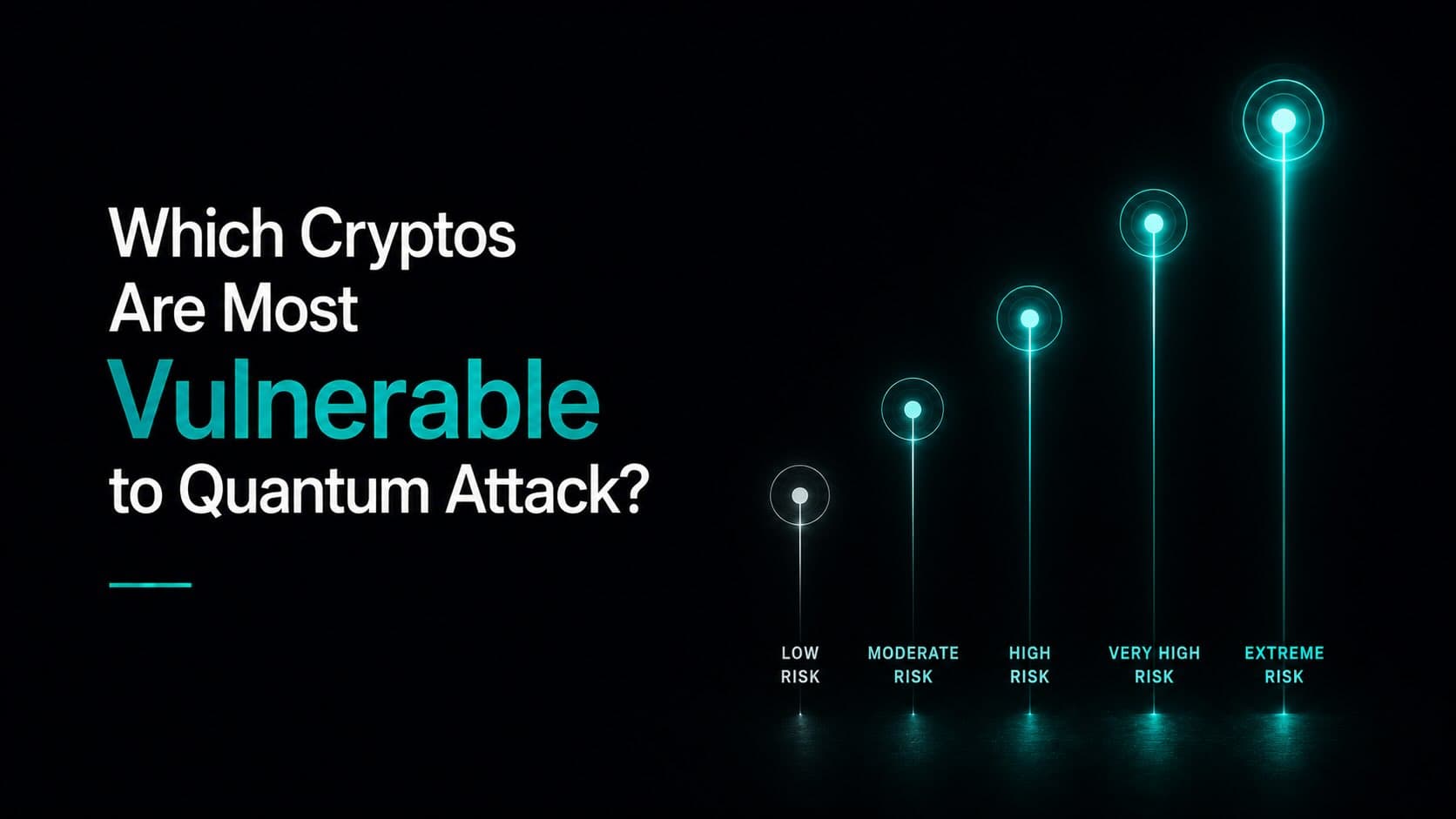
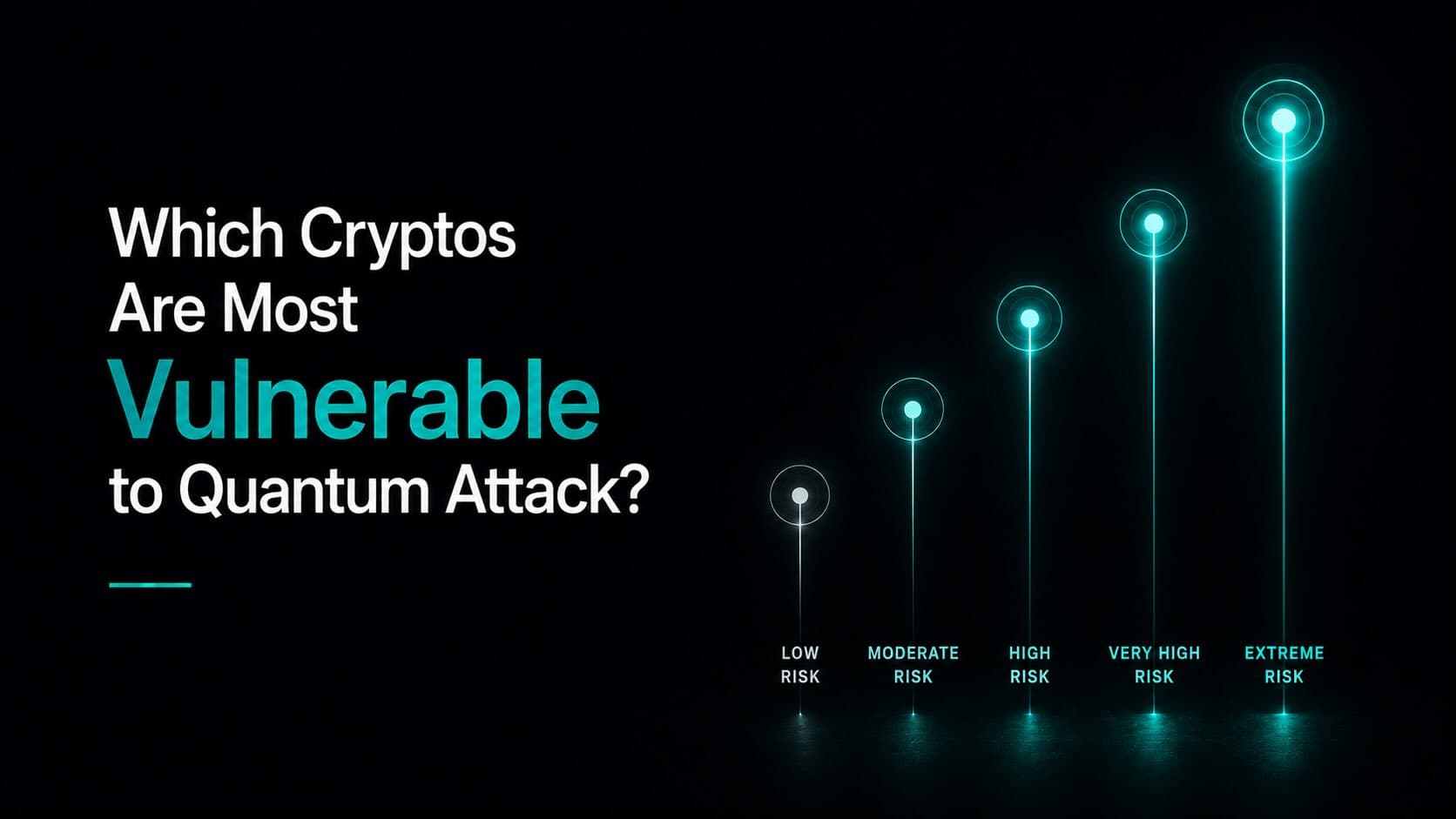
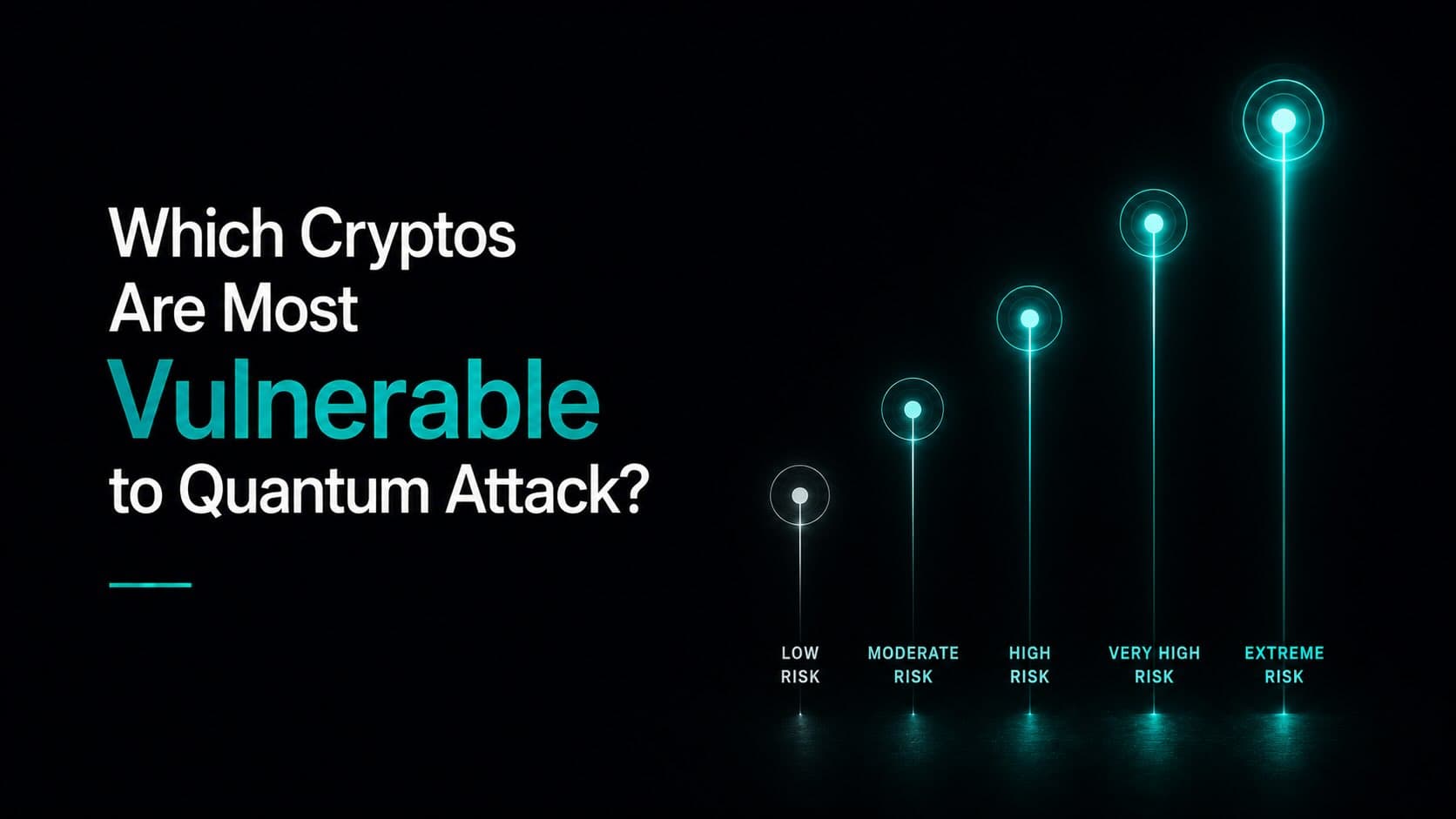
Which Cryptocurrencies Are Most Vulnerable to Quantum Attack? A Full Ranking
Bitcoin, Ethereum, Solana, XRP — not all blockchains face the same quantum risk. The signature scheme, address format, and key exposure history all determine how exposed a network is. Here is a ranked breakdown of the major cryptocurrencies by quantum vulnerability.
Google Willow and Bitcoin: What the Quantum Milestone Actually Means for Crypto
Google's Willow chip demonstrated below-threshold error correction in December 2024 — the key prerequisite for scaling toward cryptographically relevant quantum computers. Here is what the milestone actually proves, what it does not, and why it matters more than the headlines suggested.
Nation-States Are Already Preparing to Break Crypto. Here Is the Evidence.
NSA, GCHQ, and their counterparts in China and Russia have quantum research programs with classified budgets that dwarf private sector spending. The harvest-now-decrypt-later strategy is not theoretical — it is current intelligence collection doctrine. Here is what the evidence shows.
Should You Move Your Bitcoin Now? A Quantum Risk Assessment for BTC Holders
Whether you should act on the quantum threat to Bitcoin depends on three factors: your address exposure profile, your holding horizon, and how you assess the hardware timeline. This is a structured framework for making that decision without overstating or dismissing the risk.
What Is a Quantum Resistant Blockchain? A Complete Technical Guide
A quantum resistant blockchain protects every cryptographic layer against fault-tolerant quantum attack — not just transaction signatures, but wallets, consensus, and historical chain state. Most chains claiming the label satisfy none of the five architectural properties that genuinely justify it.
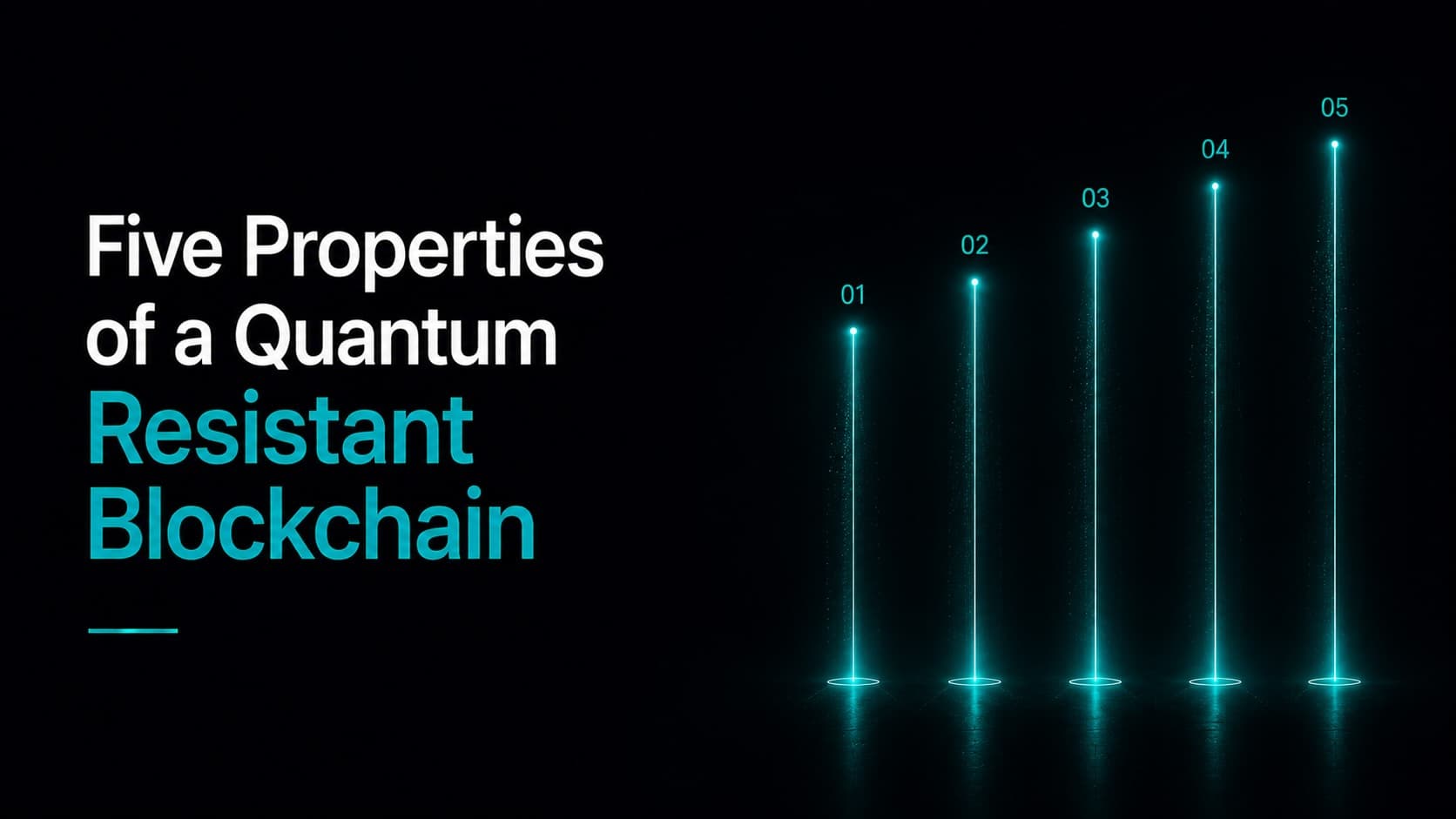
Five Properties That Define a Genuinely Quantum Resistant Blockchain
Most blockchains claiming quantum resistance satisfy just one of the five properties that actually matter. Understanding why each property is non-negotiable reveals a sharp line between genuine quantum resistance and quantum washing — and shows why Bitcoin and Ethereum score zero on the framework.
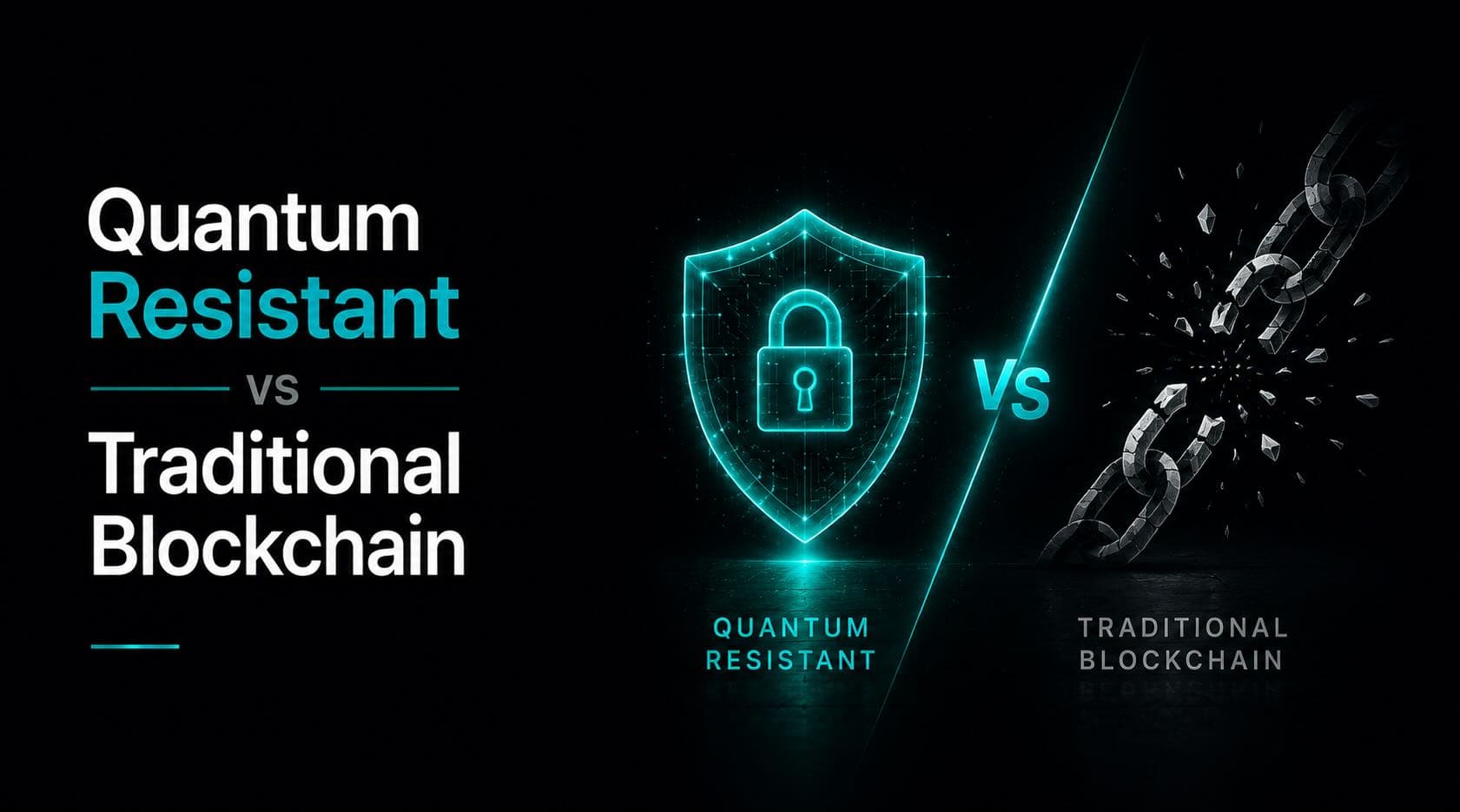
Quantum Resistant Blockchain vs Traditional Blockchain: What Actually Changes
A traditional blockchain upgraded with post-quantum signatures is still a classical architecture at every other layer. A purpose-built quantum resistant blockchain differs from traditional chains across wallet design, consensus, throughput architecture, and threat adaptivity — from the first block onward.
Why Blockchain's Post-Quantum Migration Problem Has No Easy Fix
Every major blockchain protocol acknowledges the quantum threat. Most have roadmaps. None of them have solved the hard part: what happens to wallets that cannot or do not migrate in time, how you replace signature schemes that were baked into consensus rules fifteen years ago, and how you maintain decentralisation while forcing a global upgrade on a network with no central authority. This is the migration problem — and understanding it explains why architecture at genesis matters more than any post-hoc patch.
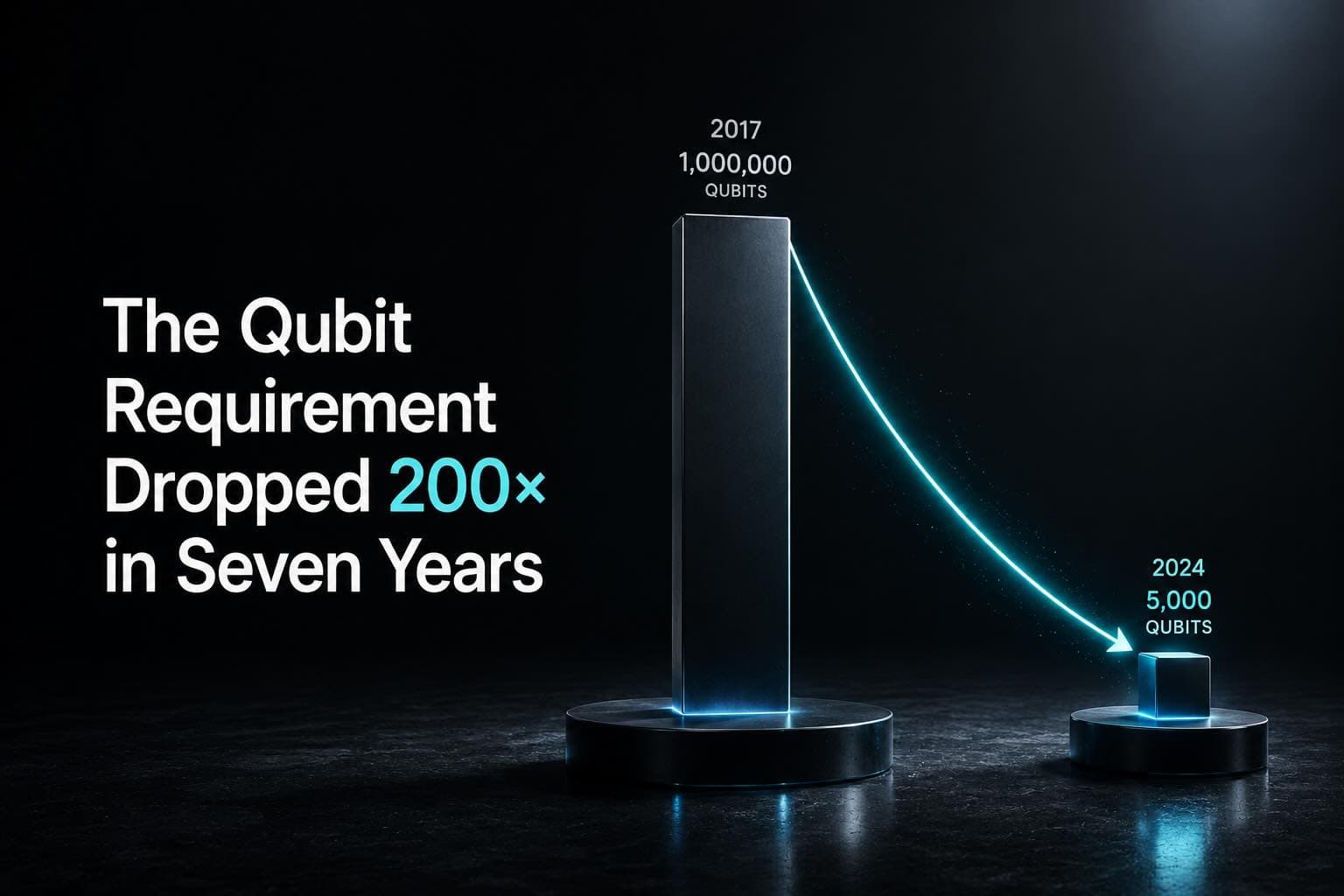
The Qubit Requirement Dropped 200× in Seven Years — Q-Day Is Closer Than Blockchain Was Ready For
In 2019, researchers estimated that breaking RSA-2048 would require around 20 million physical qubits. By early 2026, new architectural research suggests the same task may be achievable with fewer than 100,000. That 200-fold compression in seven years is not a footnote in a technical paper — it is the most important number in cryptographic security planning, and most of the blockchain industry has not priced it in.
Six World-Leading Cryptographers Say 6.9 Million Bitcoin Are Already Quantum-Exposed
The Coinbase quantum report 2026 found 6.9 million Bitcoin already sitting in quantum-vulnerable addresses due to address reuse and exposed public keys. A panel of six cryptographers from Stanford, MIT, and the Ethereum Foundation assessed cold wallets, P2PK outputs, and the address reuse problem — and found the Bitcoin vulnerability is larger and harder to fix than the industry has acknowledged.
Why QuanChain's 70% Data Reduction Changes Blockchain Economics
Post-quantum signatures are 50–100× larger than ECDSA. For a chain running 200,000+ TPS, that overhead would make storage and bandwidth costs catastrophic without a solution. QuanChain's marker-based deduplication and TADEQS commitment compression reduce per-transaction data by roughly 70% — turning a post-quantum performance penalty into a net efficiency advantage over classical chains.
How to Build Your First dApp on QuanChain: A Developer Tutorial
QuanChain's testnet is open, the SDK is stable, and the tooling should feel familiar to any developer who has shipped on an EVM-compatible chain. This tutorial walks you from zero to a deployed smart contract on Channel 2, with a TADEQS wallet integration and a Channel 1 payment flow — the full stack, end to end.
Shor's Algorithm Explained: How Quantum Computers Break Encryption
Shor's algorithm is the reason quantum computers threaten blockchain. It solves the elliptic curve discrete logarithm problem — the foundation of ECDSA — in polynomial time, meaning it can derive a private key from a public key. This deep-dive covers exactly what Shor's algorithm does to elliptic curve cryptography, which signature schemes it breaks, which it doesn't, and what the timeline to a cryptographically relevant quantum implementation looks like.
Harvest Now, Decrypt Later: Why the Quantum Threat Is Already Here
Most people assume the quantum threat to blockchain is a future problem. It is not. Sophisticated adversaries are already collecting encrypted blockchain data and public keys today, banking on the arrival of fault-tolerant quantum hardware to decrypt them later. This strategy is called harvest now, decrypt later, and it is the reason the quantum risk to your crypto is not ten years away.
QuanChain Testnet Is Live: Here's What to Expect
The QuanChain testnet is open to developers, validators, and researchers today — with all core systems running at full capacity including TADEQS wallets, the Three-Channel Architecture, Proof of Coherence consensus, and the Quantum Oracle. Here is everything you need to get started and what the path to mainnet looks like.
Proof of Coherence: A Consensus Mechanism Built for the Quantum Era
Proof of Work wastes energy to produce security, and Proof of Stake hands disproportionate influence to the wealthiest participants. Proof of Coherence rebalances validator power equally between stake and performance, prevents whale dominance through logarithmic scaling, and creates direct financial incentives for validators to maintain quantum-hardened infrastructure.
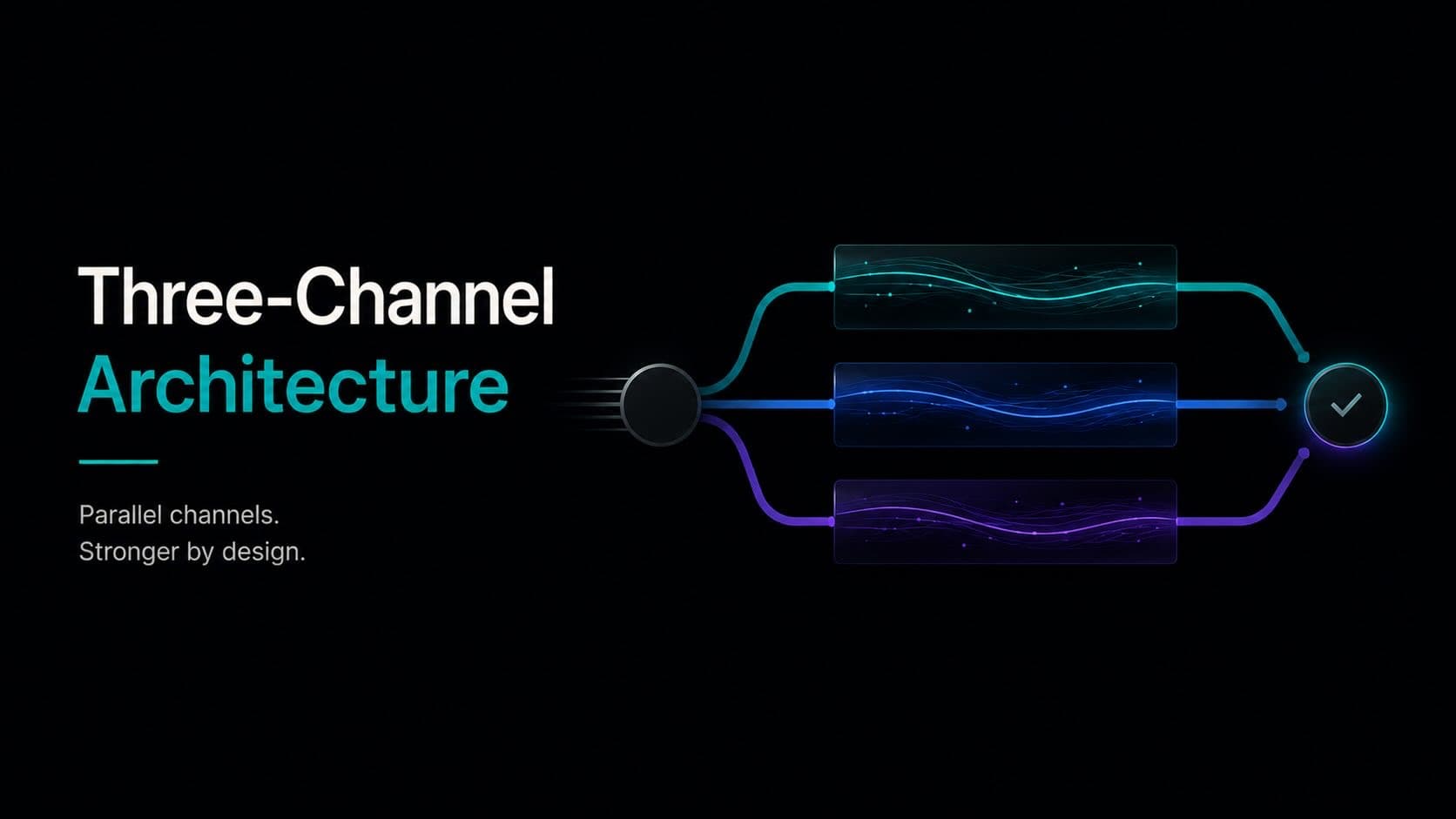
The Three-Channel Architecture: How QuanChain Achieves 200,000+ TPS
The throughput problem in blockchain is not fundamentally about hardware — it is about architecture. QuanChain's Three-Channel Architecture separates payments, smart contracts, and data into purpose-built execution environments, achieving 200,000+ TPS on Channel 1 while preserving the composability and security properties developers expect from a high-throughput blockchain.
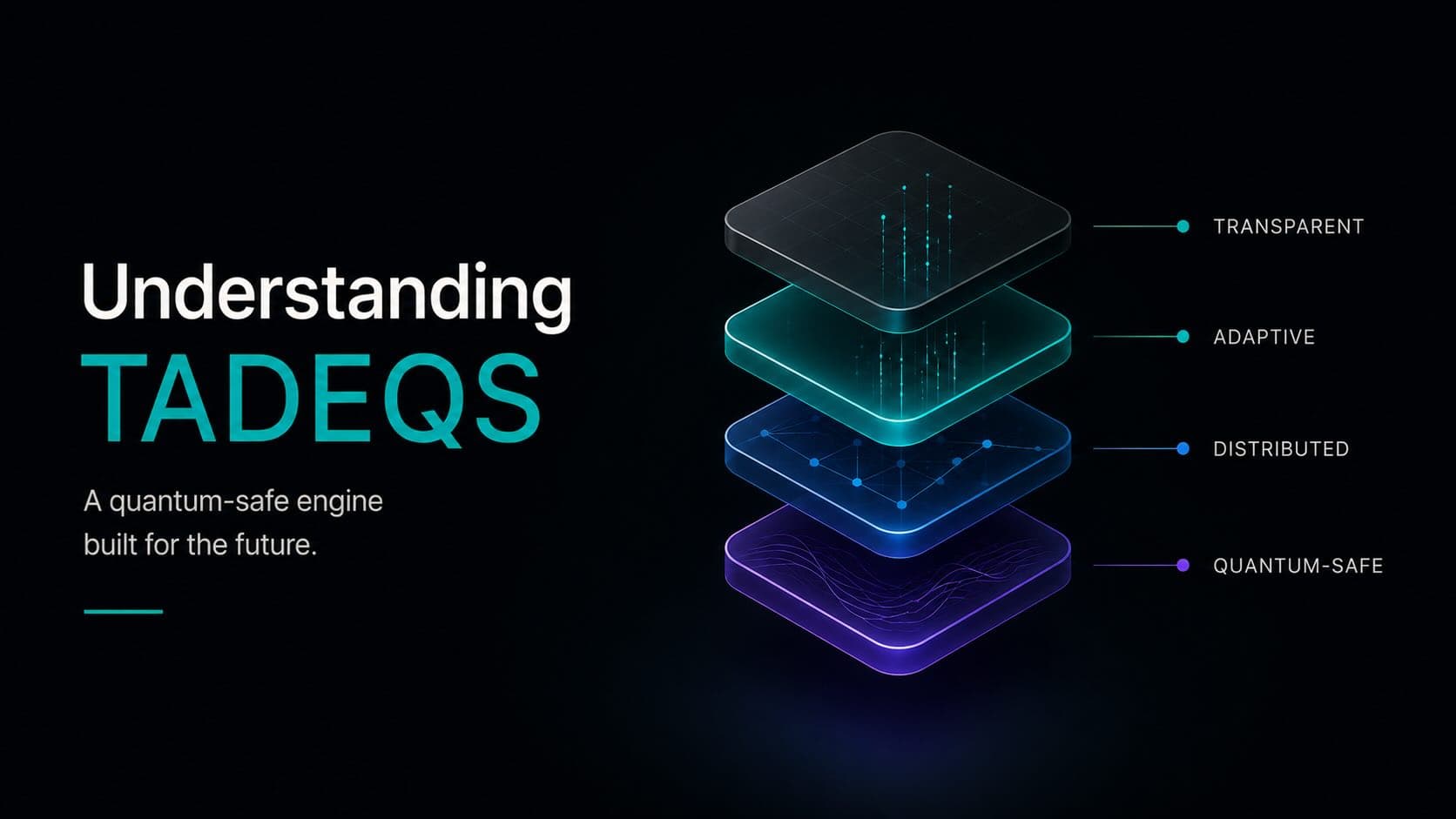
Understanding TADEQS: How QuanChain Keeps Your Keys Invisible
Every time you send a transaction on Bitcoin or Ethereum, your public key becomes permanently visible on-chain — giving any future quantum computer exactly what it needs to derive your private key. TADEQS eliminates this exposure entirely through a parent/child wallet architecture and SpendAndRotate key rotation that leaves nothing behind.
Post-Quantum Cryptography Explained: Lattice, Hash, and Code-Based Systems
Post-quantum cryptography encompasses a family of mathematical problems believed to be hard for both classical and quantum computers — and after years of evaluation, NIST has standardized the algorithms the world will rely on. Understanding how lattice-based, hash-based, and code-based schemes work illuminates why QuanChain combines multiple approaches rather than betting on just one.
Why Quantum Computing Threatens Blockchain — And What Comes Next
Shor's algorithm can break the elliptic-curve cryptography protecting every major blockchain today, and quantum hardware is advancing faster than most network architects anticipated. Understanding the precise mechanics of this threat — and the "harvest now, decrypt later" strategy already being executed by sophisticated adversaries — is the first step toward building systems that will survive it.
Introducing QuanChain: The Future of Quantum-Resistant Blockchain
QuanChain is the world's first blockchain that dynamically adapts its cryptographic security in response to real-time quantum computing threats. Built from the ground up for the post-quantum era, it combines unprecedented throughput, invisible key rotation, and a novel consensus mechanism into a single unified network.

Stay Updated
Subscribe to our newsletter for the latest updates, research insights, and announcements.