What Is SR25519 and Why Is It Quantum-Vulnerable?
Polkadot uses SR25519 as its primary signature scheme. SR25519 is based on Schnorrkel, an implementation of Schnorr signatures operating on the Ristretto255 group, which is derived from Curve25519. It was developed by the Web3 Foundation as an improvement over standard Schnorr or ECDSA implementations, offering better security properties for specific use cases including hierarchical deterministic key derivation.
SR25519 is quantum-vulnerable. Schnorr signatures, like ECDSA, rely on the elliptic curve discrete logarithm problem for their security. Shor's algorithm solves this problem in polynomial time on a sufficiently powerful quantum computer. The specific curve (Ristretto255) and the Schnorr construction do not change this. SR25519's advantages over secp256k1 are meaningful for classical adversaries. Against a quantum adversary, both are broken by the same algorithm.
Any Polkadot account that has signed a transaction has exposed its public key on-chain. That public key is the input Shor's algorithm needs to derive the private key. The how Shor's algorithm works article covers the mathematical basis of this attack.
How Does the Parachain Architecture Affect Quantum Risk?
Polkadot's architecture separates the relay chain from parachains. The relay chain provides shared security and consensus. Parachains are independent blockchains that lease slots on the relay chain, using it for finality and cross-chain messaging. Each parachain can have its own runtime logic, but most parachains built on Substrate inherit their cryptographic infrastructure from the Substrate framework.
This creates a layered exposure. The relay chain's validator set uses SR25519 keys for block production (BABE) and finality (GRANDPA). Breaking relay chain validator keys would allow an attacker to disrupt consensus and finality for all parachains simultaneously. This is a more concentrated and higher-impact attack than targeting individual user wallets.
Parachains that use standard Substrate key types inherit SR25519 for account signing. A quantum upgrade to the relay chain alone would not automatically protect parachain users. Each parachain would need to upgrade its own account and signing infrastructure. Coordinating a quantum migration across the relay chain and all active parachains is significantly more complex than upgrading a single monolithic blockchain.
The cross-chain messaging system (XCM) also uses cryptographic authentication. A complete post-quantum migration would need to address XCM message signing in addition to account keys and validator keys. The scope of the work scales with the number of active parachains and the complexity of their cross-chain integrations.
How Many Chains Inherit Polkadot's Quantum Exposure Through Substrate?
Substrate is the blockchain development framework developed by Parity Technologies for building Polkadot and Polkadot-compatible chains. It is also used to build independent blockchains that are not parachains. As of 2026, hundreds of blockchains have been built using Substrate, including Kusama, Acala, Moonbeam, Astar, and many others.
Most Substrate-based chains use the default Substrate key types, which include SR25519 for account signing, ed25519 for session keys in some contexts, and secp256k1 for Ethereum compatibility. All three are elliptic curve schemes vulnerable to Shor's algorithm — the same exposure that makes Solana's ed25519-based wallets vulnerable. A quantum migration in the Polkadot ecosystem would need to propagate through the entire Substrate ecosystem, not just Polkadot's own relay chain and parachains.
This is a meaningful systemic risk. The Substrate ecosystem represents a significant fraction of the broader blockchain ecosystem. The quantum vulnerability of SR25519 is not just a Polkadot problem. It is a Substrate-ecosystem problem that affects every chain that has adopted the framework without adding post-quantum cryptographic alternatives. The cryptocurrency quantum vulnerability analysis covers the broader landscape.
What Has the Web3 Foundation Published on Post-Quantum Research?
The Web3 Foundation, which funds Polkadot research and development, has engaged with post-quantum cryptography at the research level. Their academic research program has produced work on threshold signatures and cryptographic protocol design that touches on post-quantum considerations. The Foundation maintains connections with academic cryptographers who work on next-generation signature schemes.
However, the gap between research engagement and a concrete migration plan is wide. As of June 2026, the Web3 Foundation has not published a post-quantum migration roadmap for Polkadot. No Polkadot Improvement Proposal (PIP) addressing the transition to post-quantum signatures for user accounts or validator keys had been formally proposed through the OpenGov governance system.
The Polkadot ecosystem's research sophistication is genuine. Polkadot's academic foundation, including the whitepaper authored by Gavin Wood and follow-on research, reflects a technically rigorous approach to protocol design. But research sophistication does not automatically translate to quantum security. The relevant question for investors is whether that research foundation accelerates the path to a deployed solution.
What Would a Post-Quantum Upgrade Look Like Through OpenGov?
Polkadot's governance system is called OpenGov. It allows any DOT holder to propose referenda and vote on protocol changes. Major upgrades, including runtime changes that affect core cryptography, require referendum approval and go through a confirmation period before being enacted.
A post-quantum upgrade to Polkadot would be among the most significant runtime changes in the network's history. It would need to: add post-quantum signature verification to the relay chain runtime, update the account key derivation and storage mechanisms, provide a migration path for existing accounts, coordinate with parachain teams to propagate the changes, and potentially update the BABE block production and GRANDPA finality protocols.
OpenGov's open participation model is a strength for legitimacy and community buy-in. It is a constraint on speed. A controversial or complex upgrade can be delayed by governance opposition or low voter turnout. The coordination challenge of getting relay chain operators, parachain teams, and wallet providers aligned on a post-quantum migration timeline is substantial.
Kusama, Polkadot's canary network, would likely be used to test any post-quantum migration before deploying it to Polkadot mainnet. TON's dynamic sharding architecture presents an analogous challenge: coordinating a cryptographic upgrade across an actively splitting and merging network. Kusama runs Polkadot's code with a faster governance cadence and a more risk-tolerant community. A Kusama testnet for post-quantum signatures would be a meaningful signal of progress. No such testnet was active as of the date of this article.
Where Does Polkadot Stand in the Post-Quantum Landscape?
Polkadot's quantum risk profile combines the standard elliptic curve vulnerability shared by all major blockchains with additional complexity from its multi-chain architecture and the broad Substrate ecosystem. The relay chain's centrality in providing security for all parachains means that relay chain validator key security is more critical than validator key security in most other networks.
The Substrate ecosystem's breadth means that any Polkadot quantum migration would have cascading implications for hundreds of other chains. This is both a coordination challenge and a potential coordination opportunity: a well-designed post-quantum Substrate upgrade could protect a large portion of the ecosystem simultaneously.
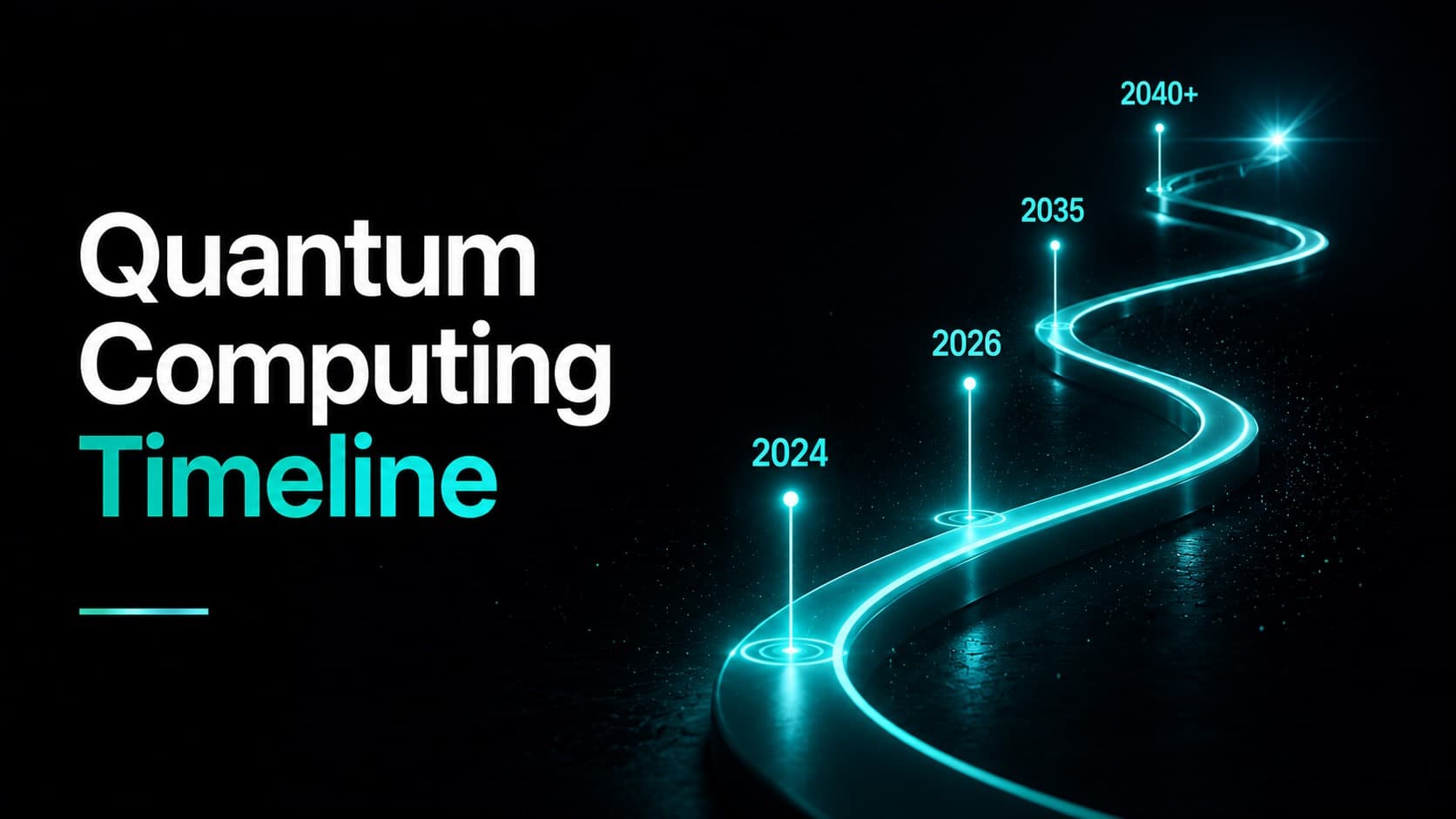
For investors and developers evaluating Polkadot's long-term security, the key question is not whether Polkadot will eventually address quantum risk but whether it will do so before quantum computers become capable of attacking live networks. The quantum computing timeline covers current estimates for when that capability might arrive. Chains that have already built post-quantum cryptography into their protocols do not face this race condition. Among established Layer 1s, Algorand's Falconnet testnet represents the most concrete post-quantum technical work completed by a major chain. The Layer 1 blockchain comparison for 2026 covers how Polkadot ranks against alternatives across multiple dimensions including security.