The QuanChain Testnet Is Open
After months of internal testing and security audits, the QuanChain testnet is live and open to the public. Developers, validators, researchers, and curious users can interact with every major system in the QuanChain stack today — no waitlist, no application required.
This is not a limited preview or a partial deployment. The QuanChain testnet runs the full production codebase with all three channels active, Proof of Coherence consensus producing real blocks, TADEQS wallets enforcing post-quantum key management, and the Quantum Oracle monitoring live threat signals. The only difference from mainnet is that test QCH tokens carry no real-world value.
What's Live on Testnet
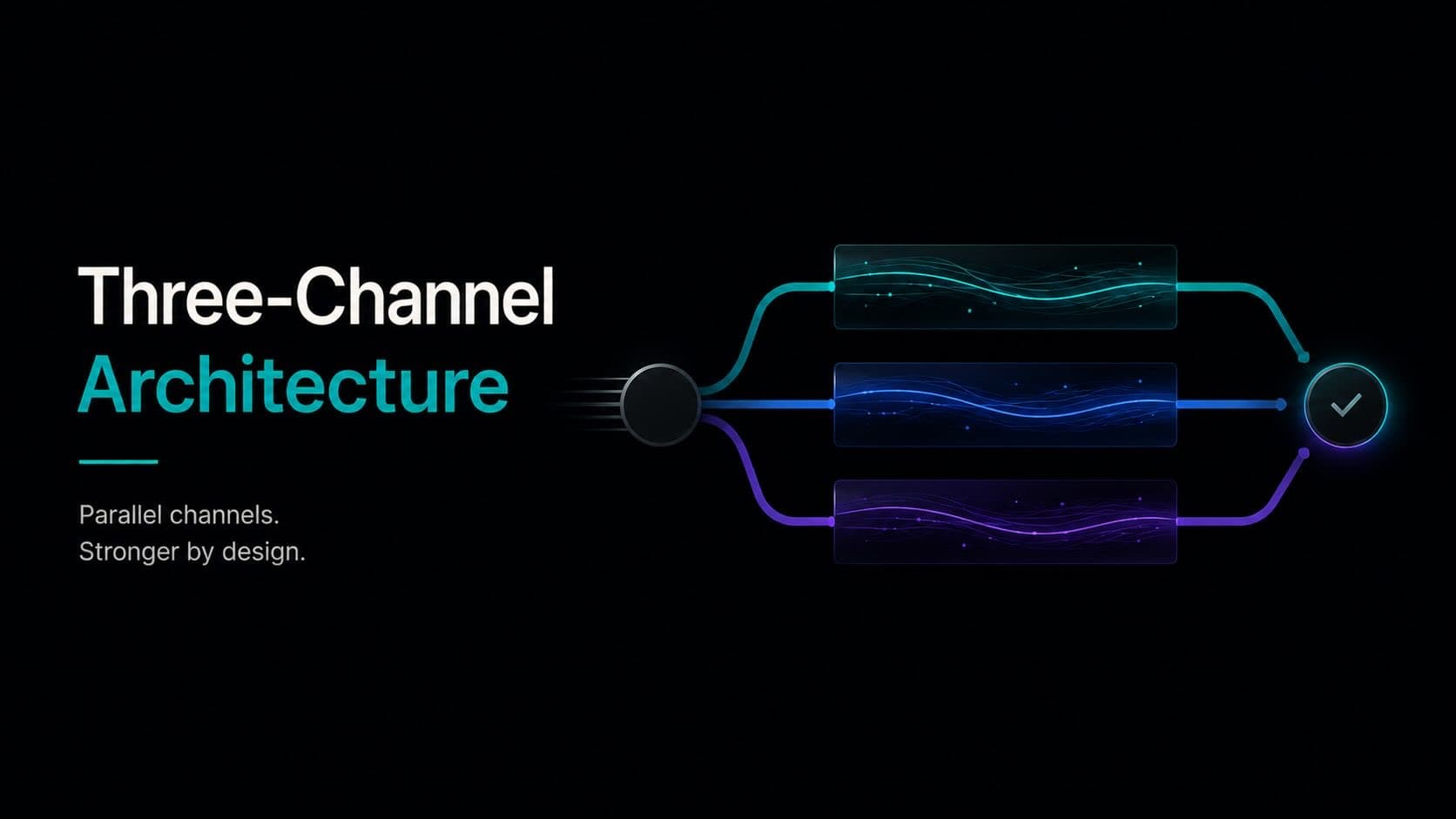
The Three-Channel Architecture
All three channels are accepting transactions:
- Channel 1 (payments) is processing test QCH transfers at full throughput. You can observe the 200,000+ TPS capacity directly in the block explorer by watching the transactions-per-second counter during peak testnet activity.
- Channel 2 (smart contracts) supports the full QuanChain VM. You can deploy contracts using the Solidity-compatible toolchain (with PQC-aware extensions), interact with existing testnet deployments, and observe the static dependency analysis and parallel execution system at work.
- Channel 3 (data) accepts anchoring and attestation transactions. Supply chain provenance, credential attestation, and cross-chain state root anchoring are all functional.
TADEQS Wallets
The testnet wallet at quanchain.ai/wallet supports the full TADEQS parent/child architecture. You can:
- Generate a new TADEQS wallet with a configurable security level (1 through 20)
- Request test QCH from the public faucet
- Observe SpendAndRotate transactions in the block explorer — note that no public key ever appears in the transaction data
- Test security level migration and observe the atomic upgrade process
- Inspect the key commitment structure for any transaction in the explorer
Proof of Coherence
The validator set on testnet is currently operating with 47 independent validators across 12 jurisdictions. Coherence scores for all validators are publicly visible in the validator dashboard. You can observe how stake weight and performance metrics combine into coherence scores, watch slashing events when they occur (testnet includes a deliberate double-signing simulator for educational purposes), and see quantum validator bonuses applied in real time.
The Quantum Oracle
The Quantum Oracle is active on testnet and displaying its current threat assessment in the monitoring dashboard at quanchain.ai/oracle. The dashboard shows:
- Current LQCp/h (Logical Qubit Cost per Hour) across tracked quantum hardware providers
- Grover-path and Shor-path attack cost estimates at current hardware capabilities
- Distance to each of the three migration trigger thresholds
- Historical trend data for all monitored metrics
The Oracle can be observed responding to simulated threat escalations — the testnet team periodically runs tabletop exercises where threat parameters are manually elevated to demonstrate the automatic migration response.
CCRP Protocol
Cross-Chain Referential Points are being anchored to Bitcoin testnet, Ethereum Sepolia, and Solana devnet on a regular schedule. You can verify QuanChain testnet state against all three external anchors using the CCRP verification tool in the block explorer.
How to Get Test QCH from the Faucet
The QuanChain testnet faucet is available at quanchain.ai/faucet. Getting test QCH takes three steps:
- Create a TADEQS wallet: Visit quanchain.ai/wallet and generate a new wallet. Select your preferred security level (Level 3 is a good default for testnet development). Save your parent wallet recovery phrase securely — even on testnet, losing it means losing access to your test QCH.
- Copy your wallet address: Your receive address is generated from your first child wallet. Copy it from the wallet interface.
- Request from the faucet: Paste your address at quanchain.ai/faucet and submit. The faucet delivers 100 test QCH immediately and allows one request per address per 24 hours. For developers who need larger amounts for contract testing, contact the developer relations team at dev@quanchain.ai to request an expanded faucet allocation.
What Developers Can Test
The testnet is designed to give developers a complete preview of the mainnet development experience. Specific areas we encourage developers to explore:
Smart Contract Deployment on Channel 2
The QuanChain developer SDK supports Hardhat and Foundry workflows with a QuanChain network configuration. Install the @quanchain/sdk package, configure your network settings to point at the testnet RPC endpoint, and deploy contracts exactly as you would on any EVM-compatible network. The PQC signature verification precompile is available for contracts that need to verify Dilithium or SPHINCS+ signatures within contract logic.
Cross-Channel Atomic Transactions
The SDK includes a CrossChannelTransaction class that handles the coordination protocol for atomic operations spanning Channel 1 and Channel 2 (or Channel 1 and Channel 3, or all three). This is a novel transaction type with no equivalent on other networks — testnet is the right place to learn its semantics before mainnet launch.
TADEQS Wallet Integration
The @quanchain/wallet package provides a full TADEQS wallet implementation for browser and Node.js environments. It handles key derivation, SpendAndRotate construction, and security level management. If you're building a wallet, exchange, or any application that manages user funds, integrating with this package on testnet before mainnet is strongly recommended.
Validator Operation
Operators interested in running mainnet validators can test the full validator setup on testnet. The validator client software is available at quanchain.ai/validators/setup, and the testnet supports full Proof of Coherence participation including stake deposits, performance scoring, and quantum attestation. Running a testnet validator for at least 30 days before mainnet launch is the best preparation for understanding the economics and operational requirements.
Roadmap to Mainnet
The testnet phase has three milestones before mainnet launch:
- Milestone 1 — Protocol Stability (current): Core systems live, faucet open, developer tools available. The team is collecting bug reports and performance data from early testers. Estimated duration: 6–8 weeks.
- Milestone 2 — External Security Audit: Full protocol audit by two independent security firms, with a focus on the TADEQS key management system, the SpendAndRotate atomic transaction, and the Proof of Coherence slashing conditions. Audit reports will be published in full. Estimated duration: 8–10 weeks.
- Milestone 3 — Incentivized Testnet: Real QCH rewards distributed to testnet validators and developers who find and report bugs. This phase stress-tests the economic model under conditions that approximate mainnet behavior. Estimated duration: 4–6 weeks.
Following successful completion of all three milestones, the team will set a mainnet launch date. Our current target is 2027, with the exact date contingent on audit results and incentivized testnet performance data.
How to Get Involved
The best place to start is quanchain.ai. From there:
- The developer documentation covers SDK setup, contract deployment, and cross-channel transactions
- The Discord server at quanchain.ai/discord is the primary community hub — the engineering team is active there daily
- Bug reports go to github.com/quanchain/protocol — all confirmed bugs earn a bug bounty proportional to severity
- The validator setup guide is at quanchain.ai/validators/setup
QuanChain is being built in public. The testnet is the first opportunity for the broader community to interact with, stress-test, and help shape a network designed to remain secure through the quantum era. We're glad you're here.