Dr. Sarah Chen
What Your Seed Phrase Actually Is
A BIP-39 seed phrase, the 12 or 24 words generated when you set up a wallet, is a human-readable encoding of 128 or 256 bits of entropy. When you enter those words into a wallet, the software runs them through PBKDF2-HMAC-SHA512 with the string "mnemonic" plus an optional passphrase as the salt, iterating 2048 times. The output is a 512-bit master seed. From that master seed, BIP-32 HD key derivation generates your private keys using HMAC-SHA512 operations along the derivation path (m/44'/60'/0'/0/0 for your first Ethereum address, for example).
The key point: your seed phrase is a source of entropy for key derivation. The security of the seed phrase itself rests on the size of the entropy space and the strength of the hash functions used in derivation.
Why Grover's Algorithm Does Not Break Your Seed Phrase
Grover's algorithm is the quantum algorithm that reduces the effective security of symmetric-key cryptography and hash functions. Classically, brute-forcing an N-bit space requires 2^N operations. Grover's algorithm reduces this to 2^(N/2) operations on a quantum computer.
For a 24-word BIP-39 phrase, the entropy comes from 2048 possible words chosen with 8 words of checksum. The effective entropy is 256 bits for a 24-word phrase. Grover's algorithm reduces this to an effective 128-bit security level against a quantum brute-force attack.
128 bits of quantum security is, to put it plainly, not a problem. A quantum computer performing 10^18 operations per second, far beyond anything theoretically buildable in this century, would take longer than the age of the universe to brute-force a 128-bit space. Even with a 12-word phrase (128-bit entropy, 64-bit quantum security), a direct brute-force attack on the seed phrase is not the vector. The math simply does not work in the attacker's favor.
For a 12-word phrase, 64 bits of quantum security is technically within the realm of concern for very long-term storage, which is why 24-word phrases are generally recommended for high-value holdings. But even here, the seed phrase brute-force is not what should concern you.
The Actual Quantum Threat: Your Addresses, Not Your Words
Here is the distinction that matters: quantum computers do not attack seed phrases. They attack ECDSA public keys.
Your seed phrase generates a private key. The private key generates a public key. The public key is broadcast to the blockchain every time you send a transaction. Shor's algorithm can compute the private key from the public key. It cannot brute-force the seed phrase from the public key; that is a different, much harder problem.
The attack chain is: public key (visible on-chain) to private key (via Shor's algorithm) to full wallet control. The seed phrase never enters this attack chain. An attacker with a quantum computer does not need your seed phrase. They need your public key, which you broadcast yourself every time you spend.
This means:
- A seed phrase stored in a secure location protects your keys from classical theft. Keep doing this.
- The quantum threat comes from the ECDSA keys derived from that seed phrase, specifically from their public key exposure on-chain.
- A "quantum-resistant seed phrase" is not a meaningful concept. Seed phrase entropy is already quantum-robust. Quantum-resistant address usage is the meaningful concept.
Read more about how quantum attacks actually work against on-chain addresses in our harvest-now-decrypt-later explainer.
The Common Misconception: Reframed
Many users, when they first hear about quantum computing threats to crypto, go looking for a "quantum-resistant seed phrase." Some vendors exploit this by selling hardware with different word lists or alternative derivation schemes, implying quantum resistance. This is misleading at best and a scam at worst.
The seed phrase is not the vulnerability. If you have a 24-word BIP-39 phrase and you never expose your public key, a quantum computer has nothing useful to attack. The seed phrase entropy is sufficient.
The vulnerability is ECDSA itself. When you generate an Ethereum or Bitcoin address from your seed, the address is derived from the public key. If you send a transaction, the public key is revealed. That is the moment quantum risk becomes concrete for that address.
What Address Usage Practices Actually Reduce Quantum Risk
Given that the seed phrase is not the problem, your attention should go to how you use the addresses derived from it:
- Use each address only once as a sender. Once you spend from an address, the public key is on-chain permanently. Move remaining funds to a fresh address.
- Use address formats that hash the public key before putting it on-chain. On Bitcoin, this means P2WPKH or P2TR (key-path). On Ethereum, the 20-byte address is already a hash of the public key, so the key itself is hidden until a spend.
- Never store large amounts on addresses you have sent from. Those addresses have exposed public keys and are the highest-priority migration targets if a credible quantum threat materializes.
- Avoid legacy P2PK outputs on Bitcoin. These embed the full public key in the output script, meaning the public key is exposed even without any spending transaction from that address.
- If your holdings are stored on a hardware wallet, the hardware wallet quantum vulnerability guide explains which devices and firmware versions are relevant to quantum threat scenarios and what protections they do and do not provide at the signing algorithm level.
How QuanChain Handles This Differently
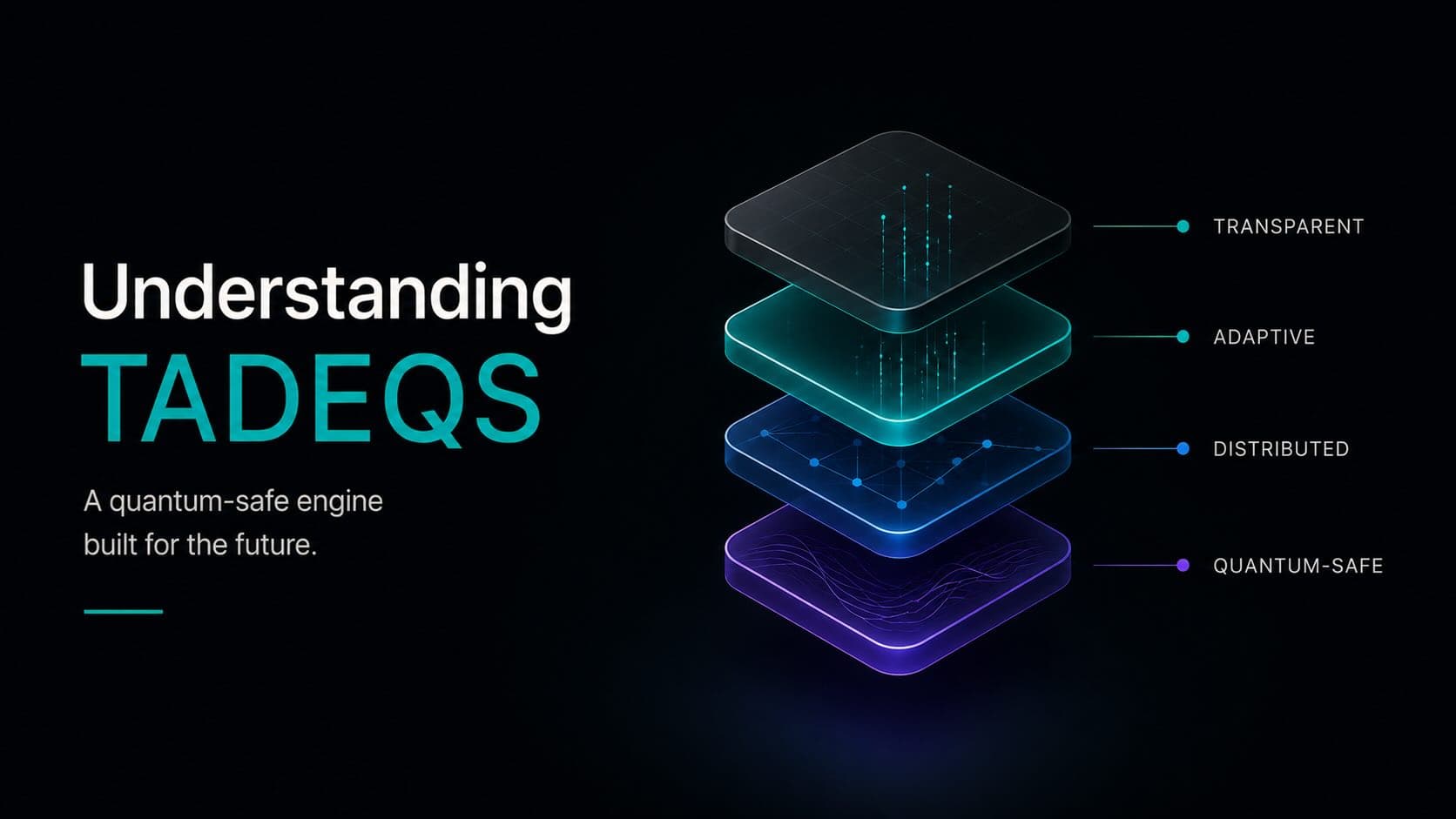
QuanChain's TADEQS (Transaction-Authenticated Decentralized Entropy Quantum Shield) architecture addresses the public key exposure problem at the protocol level. The system uses a parent-child address structure where the child address used for any given transaction is derived in a way that rotation is built into the spend operation itself. Even if a quantum attacker intercepts the public key from a spend transaction, the architecture limits what they can do with it.
This does not change what your seed phrase does. Under QuanChain, your seed phrase still generates the master key using the same BIP-32 derivation. What changes is the on-chain signature scheme: ML-DSA instead of ECDSA. The public key under ML-DSA is not vulnerable to Shor's algorithm. So the exposure problem, where seeing the public key lets a quantum computer derive the private key, does not apply.
Understanding this distinction, seed phrase security versus on-chain signature scheme security, is foundational to evaluating any wallet's quantum resistance claims. Learn more in our guide to how TADEQS works and our post-quantum wallet security overview.