Dr. Sarah Chen
Why Key Management Matters for Quantum Migration
Post-quantum migration is not a single action. It is a process of identifying which keys have exposed public keys, prioritizing migration, and transitioning to post-quantum signing as it becomes available on each chain you use. That process depends entirely on how well you can answer the question: which of my addresses have exposed public keys?
If you have never thought systematically about your key structure, the answer to that question is "I don't know," and that makes migration difficult and risky. Good key management, knowing exactly what keys you have, what they are used for, and what their quantum exposure status is, turns an opaque problem into a manageable one.
NIST's key management guidance (SP 800-57) has been updated to address the post-quantum transition. The core message is that organizations and individuals with significant crypto holdings should begin inventorying their cryptographic assets now, before quantum-capable attackers exist, because migration takes time. The same logic applies to individual crypto holders.
The Key Management Hierarchy Problem
A typical crypto user, even a non-institutional one, actually manages several types of cryptographic material:
- Master seed: The BIP-39 words that generate everything. Quantum-robust as entropy; see our seed phrase quantum security analysis.
- Extended private keys (xprv): The root of an HD derivation path. Exposure of an xprv compromises all child keys derived from it.
- Account-level extended public keys (xpub): Used by watch-only wallets. These expose the public keys of all child addresses, which is a major quantum risk if the xpub is stored or shared.
- Individual private keys: The signing keys for specific addresses.
- Individual public keys and addresses: What gets broadcast on-chain.
Each level of this hierarchy has different quantum exposure characteristics. The xpub problem is often overlooked: if you have ever exported a watch-only xpub for portfolio tracking, that xpub contains (or allows derivation of) the public keys for all addresses in that derivation branch. Any service or device that holds your xpub effectively holds the quantum-attack surface for all those addresses.
A Tiered Key Structure That Reduces Quantum Risk
Structure your holdings across tiers based on value, access frequency, and quantum exposure tolerance:
Tier 1: Hot Wallet Keys (Small Daily Amounts)
- Keep only what you need for active use: transaction fees, immediate spending, DeFi interactions.
- Accept that these keys will have exposed public keys from regular use. The quantum risk is present but the value at risk is bounded.
- Use fresh receive addresses for every incoming transaction. Most modern wallets do this automatically.
- Set a balance ceiling. When the hot wallet exceeds your comfort threshold, sweep excess to cold storage.
Tier 2: Cold Wallet Keys (Large Holdings)
- These keys should have minimal public key exposure. Strict no-reuse policy: each address receives once, is spent in full, and is never used again.
- Track every address in this tier and its spend history. A spreadsheet or encrypted notes file is sufficient for individuals; a key management system is necessary for institutions.
- Never export xpubs from cold wallet keys to online services. The quantum exposure from the xpub negates some of the benefit of cold storage.
- Label addresses with date of last use and quantum exposure status (never spent / has spend history).
Tier 3: Hardware Wallet as Signing Intermediary
- Use a hardware wallet for all active signing operations. This protects against classical key theft even as you accept quantum risk on the signing algorithm.
- Understand the current limitations: hardware wallets use ECDSA, not ML-DSA. See our hardware wallet quantum vulnerability analysis for details on each vendor.
- Keep hardware wallet firmware updated. Vendors will ship post-quantum updates when they are ready; staying current means you get them promptly.
Tier 4: Paper or Metal Backup as Disaster Recovery
- Store your seed phrase in a physical medium that cannot be remotely compromised. This is your recovery mechanism, not an active key store.
- Use multiple geographically separated copies for high-value holdings. A house fire that destroys your only seed phrase backup is a classical, non-quantum disaster that happens regularly.
- Never photograph your seed phrase. Never type it into any online service. Never store it in cloud storage.
Key Labeling and Exposure Tracking
The most operationally useful thing you can do for quantum migration readiness is to track the spend history of your addresses. For each address you control, record:
- The derivation path (m/44'/0'/0'/0/0, etc.).
- The date it was created.
- Whether it has ever been used as a sender. This is the key field for quantum exposure status.
- The current balance.
- The address format (P2PKH, P2WPKH, P2TR for Bitcoin; standard hex for Ethereum).
When you build this inventory, prioritize migration starting from: highest value and has spend history (highest quantum risk), then highest value and no spend history, then lower value addresses in the same order.
This inventory also protects against a different risk: during migration, you will be moving funds between addresses. Without a clear record of what you have and where it is, migration errors are much more likely. Methodical inventory is not bureaucratic overhead; it is the foundation of safe migration.
Enterprise and Institutional Key Management
If you manage crypto holdings for an organization, the key management challenge scales significantly. You likely have multiple signers, multi-signature schemes, hardware security modules, and potentially custody relationships with third parties.
Each of these involves ECDSA keys at some level. Multi-signature schemes combine quantum-vulnerable ECDSA keys; the n-of-m structure does not change the underlying signature algorithm's quantum vulnerability. Your custody provider's signing keys are ECDSA. Your HSM is signing with ECDSA.
For institutional holdings, the NIST SP 800-57 guidance is the starting point. Beyond that, you need a cryptographic inventory: a catalog of every system that uses asymmetric cryptography, the algorithms in use, and the migration dependencies. Post-quantum migration for an institution is a multi-year project that needs to start with this inventory.
How TADEQS Eliminates the Key Management Problem at the Protocol Level
The reason key management for quantum migration is complex is that ECDSA creates a permanent record of public key exposure. Once you spend from an address, the public key is on-chain forever. There is no way to un-expose it. Migration is therefore always reactive.
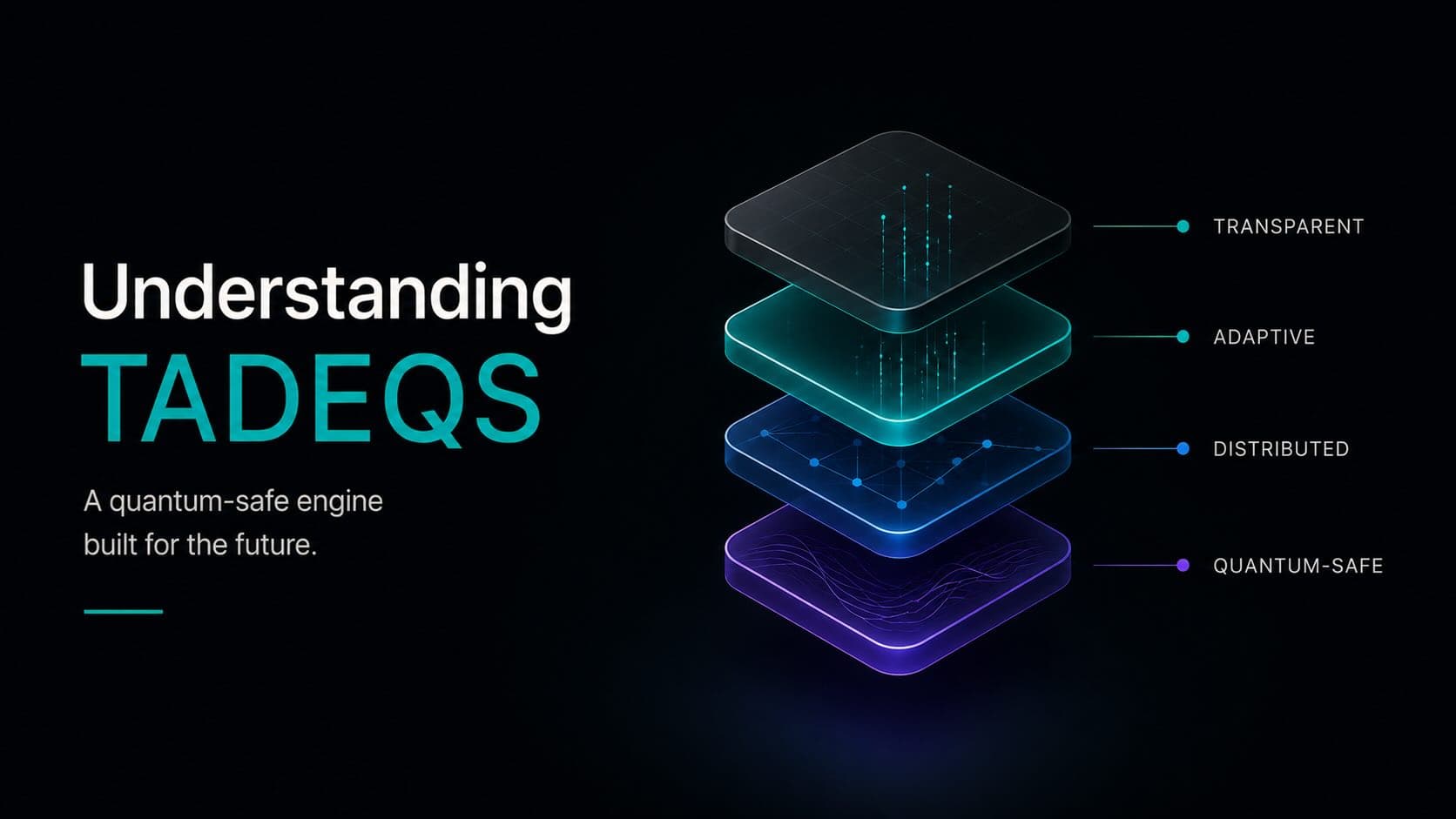
QuanChain's TADEQS architecture takes a different approach. The SpendAndRotate operation builds key rotation into the act of spending. When you spend from an address, the protocol automatically derives a new quantum-safe address for your remaining balance. The rotation is authenticated by the transaction itself, not by a separate management operation.
This means there is no accumulated backlog of exposed public keys to manage. Every spend is also a rotation. The key management problem that drives the complexity described in this guide is handled at the protocol level rather than pushed to the user. For users who want this property now, QuanChain native assets provide it. For users still on classical ECDSA chains, the manual key management approach described here is the practical alternative. Read about the TADEQS architecture and the quantum-safe smart contract framework for the full picture.